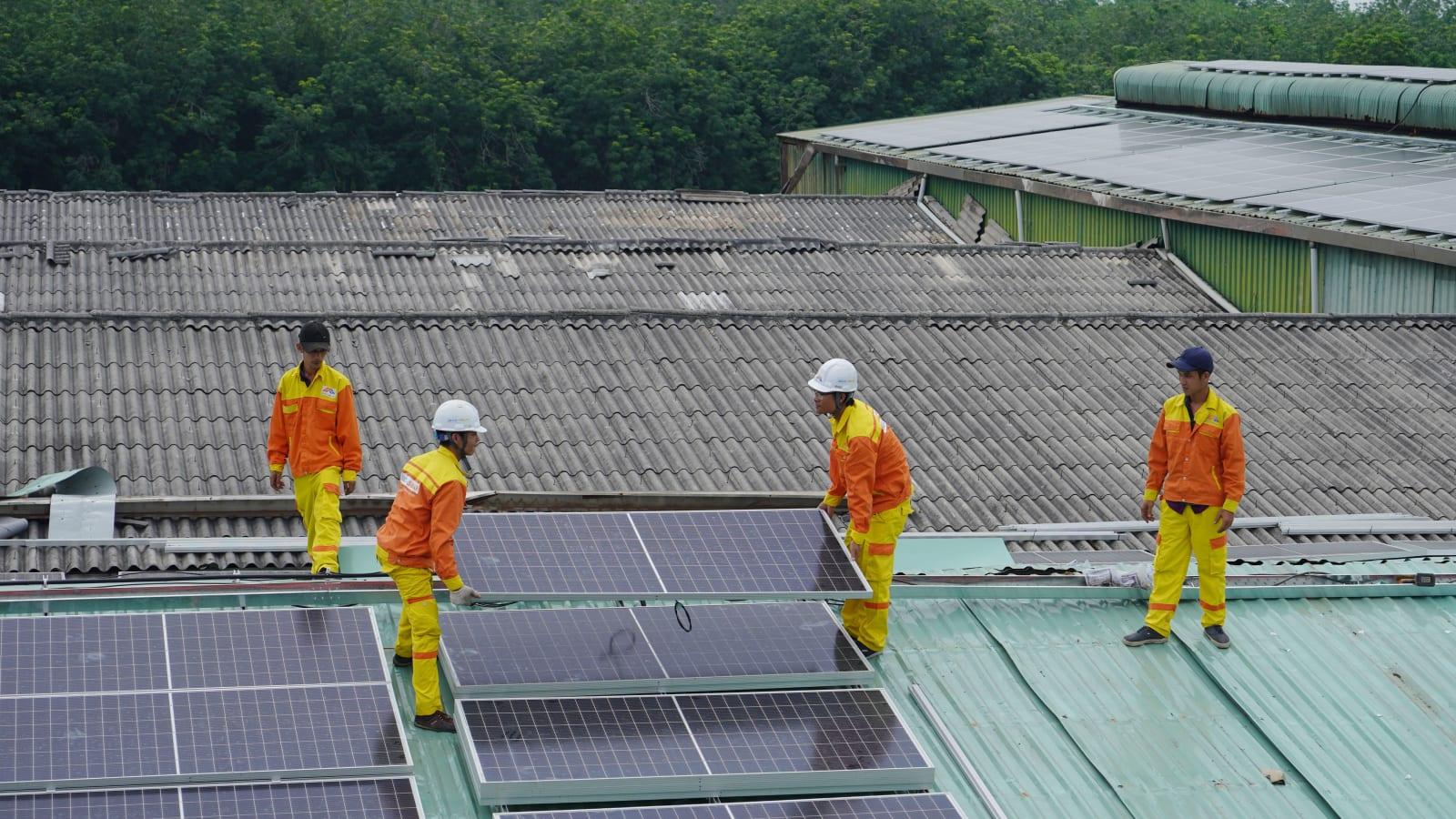
Electricity reaches 1,400 more village sites as the national rollout moves toward an August launch
By Sirkularium Editorial Team, 8 min read
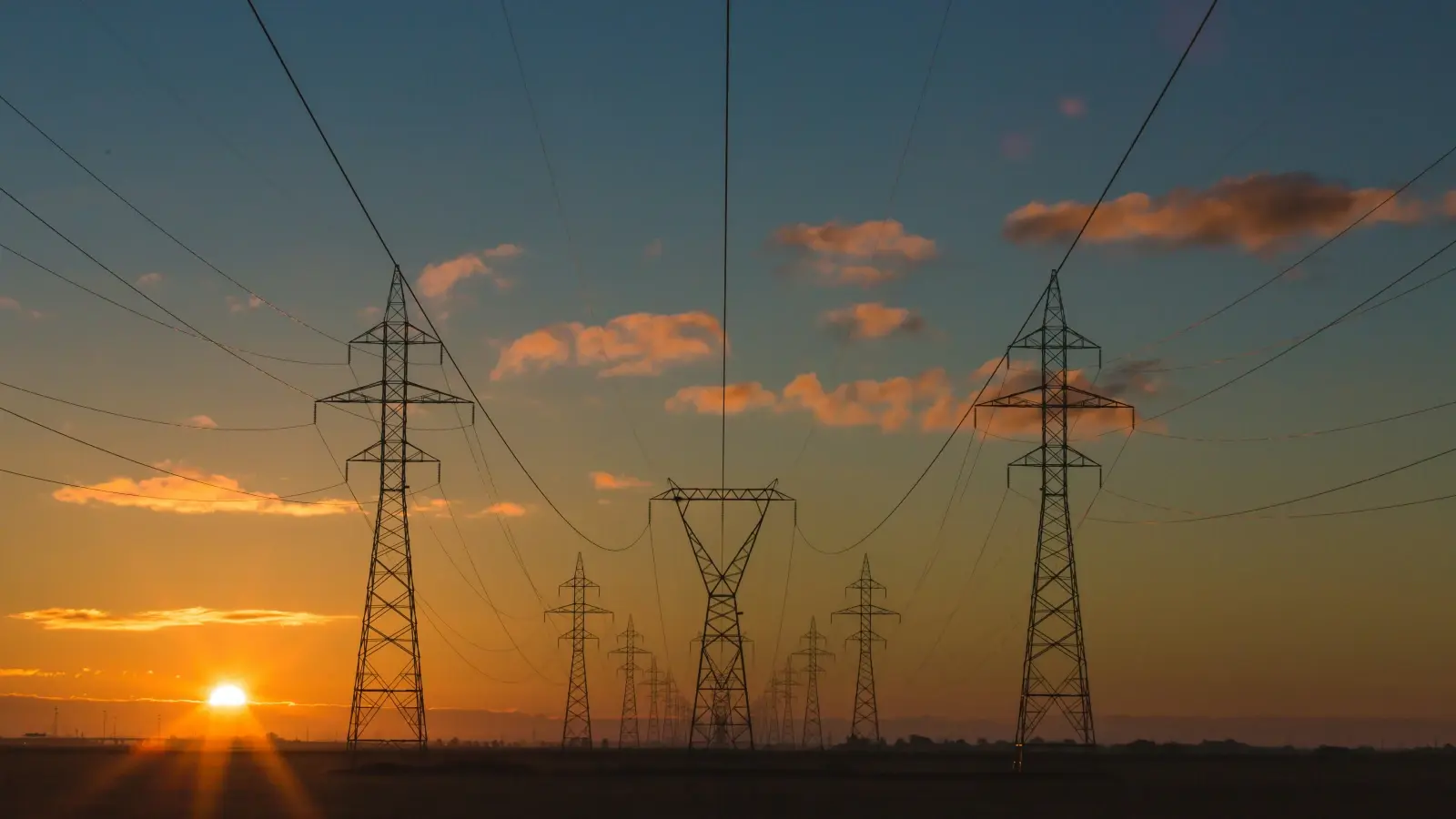
Minister Bahlil Lahadalia confirmed on 3 August that the national village electricity programme will be launched formally this month, with more than 1,400 completed sites awaiting inauguration and a delivery model built on grid extension, renewable mini grids, and solar home systems.
A launch date moves into view
On Monday, 3 August 2026, Minister of Energy and Mineral Resources Bahlil Lahadalia arrived at Istana Merdeka in Jakarta to brief President Prabowo Subianto on the ministry's work programme. Electricity access sat at the centre of the discussion. Speaking after the meeting, which lasted around fifteen minutes, the minister confirmed that the national village electricity programme, known in Indonesia as Lisdes, remains on course for a formal launch during August. The exact date is still being settled. Bahlil indicated the ceremony is planned to take place before 14 August, the day the President delivers the 2027 state budget address to the People's Consultative Assembly.
The substance behind that ceremony is already built. More than 1,400 sites financed under the 2025 budget have been completed and are ready to be switched on. These are not pilot installations. They are finished distribution networks, communal solar arrays, and household connections in places that have never had a metered supply.
For a country that reports a household electrification ratio of 99.83 percent and a village electrification ratio of 99.97 percent, the remaining gap is small in percentage terms and large in human terms. Roughly 98.56 percent of electrified households are served directly by PLN, with the balance covered by other arrangements. The closing fraction is where the hardest engineering lives.
The numbers behind the rollout
Ministry figures put the remaining task at approximately 11,000 villages and hamlets without electricity access. Bahlil has described the eastern concentration in more detail, citing about 5,700 villages and 4,400 hamlets still waiting, with the heaviest clusters in Sulawesi, Maluku, and Papua. Sources define the unit differently depending on whether they count administrative villages or individual delivery sites. In June 2026, Jisman P. Hutajulu, Special Staff to the Minister of Energy and Mineral Resources for Strategic Planning, put the outstanding figure at around 8,000 locations.
Roughly 8,000 locations still lack electricity access, and this is something we have to finish.
The annual programme is scaling. Against the 1,400 sites completed under the 2025 allocation, the ministry has set a 2026 target of 2,065 sites carrying a potential 173,853 new customers, rising to 2,759 sites and 215,108 customers in 2027. That trajectory, sustained, is what makes a 2029 completion date arithmetically plausible rather than aspirational.
Three delivery routes, one target
What distinguishes this programme from conventional grid expansion is that it does not assume the grid is the answer. The ministry has set out three delivery routes, matched to settlement geography.
The first is straightforward network extension for communities that sit close to existing PLN infrastructure, where a distribution line is the cheapest and most durable option. The second is mini grids built on local renewable resources, serving clustered settlements that are too far from the backbone to justify a line but dense enough to support a shared generation asset. The third is individual solar systems paired with battery storage for households scattered across islands and highlands where no shared network makes economic sense.
This is a meaningful design choice. It treats distributed renewable generation as a primary delivery mechanism rather than a stopgap, and it removes the implicit assumption that every household must eventually be connected to a national wire. For institutions planning energy access in archipelagic and mountainous terrain, this three route framework is more useful than a single target number, because it maps directly onto procurement categories, operations and maintenance models, and skills requirements that differ sharply from one another.
It also matters for efficiency. A mini grid or a solar home system rewards demand side discipline in a way that a subsidised grid connection does not. Appliance efficiency, load scheduling, and storage sizing become live design variables from day one, which builds efficiency habits into new demand rather than retrofitting them later.
Financing that is already committed
The programme is funded rather than proposed. The ministry has allocated approximately Rp9.7 trillion for village electricity in 2027, structured through multi year contracts. Tri Winarno, Director General of Minerals and Coal and acting Director General of Electricity, set out the split.
For the 2026 to 2027 multi year contract scheme, 3,054 sites are budgeted at Rp8.77 trillion. For the 2027 to 2028 scheme, 101 sites are allocated Rp977.57 billion.
For 2026, the reported allocation is around Rp10.3 trillion, comprising roughly Rp994 billion in regular budget and Rp9.3 trillion in additional funding. A separate Rp520 billion supports the New Connection Assistance programme, known as BPBL, which covers connection costs for low income households in areas the grid already reaches. In late July, following the palace meeting on 28 July, Bahlil confirmed that budget for the 2026 and 2027 phases is secure and that the programme has moved into implementation.
Reporting also notes a proposed Rp9.75 trillion for village electricity infrastructure development, a figure closely aligned with the 2027 allocation and reflecting the same multi year envelope viewed from the proposal stage.
Alongside village electrification, the 3 August discussions covered the first phase of the national 100 gigawatt solar programme, which has been approved and is being prepared for groundbreaking. The two agendas reinforce each other. Domestic solar manufacturing scale lowers the unit cost of exactly the equipment that off grid electrification consumes in volume.
What government and public institutions should watch
Three things deserve attention over the coming quarters.
First, the handover model. Completed sites need an operator, a tariff arrangement, and a spare parts chain. Mini grids and solar home systems fail on maintenance far more often than on installation, and the institutional answer to who services a battery bank in year four is worth settling before year one closes.
Second, the demand profile. Electrification unlocks productive use, and productive use is where the development return sits. Regional governments that pair new connections with cold storage, agricultural processing, or workshop equipment will convert access into income. Those that do not will see load stay at lighting and phone charging levels, which makes the underlying asset harder to sustain.
Third, procurement standardisation. With 2,065 sites in 2026 and 2,759 in 2027, repeatable specifications for panels, inverters, batteries, and metering will determine whether costs fall with volume. Standardisation is also what makes a national spare parts inventory feasible.
Sirkularium's view
Indonesia is closing the last and most difficult portion of its electrification task, and it is doing so with renewable generation as a first choice rather than a fallback. That is a genuinely constructive position for a country of more than seventeen thousand islands, and it puts a distributed energy fleet into service that will still be an asset long after the connection targets are met.
For government and public institutions, the practical opportunity is in the operating layer. The capital programme is defined and funded through 2028. What remains open is how these assets are run, how efficiently the new demand behind them is served, and how quickly productive use follows the connection. Building energy management capability into regional institutions now, while the fleet is still being installed, is materially cheaper than adding it later.
Sirkularium's read is that village electrification and industrial energy efficiency are the same discipline applied at different scales. Both turn on measurement, on matching supply to actual demand rather than assumed demand, and on treating avoided consumption as a resource. What to watch next is the inauguration itself, the operations and maintenance framework published alongside it, and whether the 2026 target of 2,065 sites tracks to schedule through the year.
Village electricity programme sites by year
Values in sites
Sources
- ANTARA News, Bahlil reports on energy resilience programme to President Prabowo
- Harian Jogja, Bahlil targets August launch for the village electricity programme
- ANTARA News, President to inaugurate electricity in 1,400 villages before 14 August
- Detik Finance, Prabowo to inaugurate connections for 1,400 villages
- Merdeka, Bahlil presents village electricity progress with 1,400 sites awaiting inauguration
- CNN Indonesia, Ministry targets 173,853 new customers through Lisdes and BPBL
- ANTARA News, Ministry allocates Rp9.7 trillion for village electricity in 2027
- CNN Indonesia, Bahlil on roughly 11,000 villages still without electricity