Pertamina turns an annual efficiency ritual into a verified emissions track record
By Sirkularium Editorial Team, 8 min read

On 13 August 2026, PT Kilang Pertamina Internasional kicked off Bulan Energy & Loss 2026 simultaneously across all its refinery units, urging workers toward energy efficiency and loss reduction under a digitalization theme. The campaign follows a 2025 in which the refining unit cut more than 450,000 tonnes of CO2 equivalent against a 370,000 tonne target.
On 13 August 2026, PT Kilang Pertamina Internasional (KPI) launched Bulan Energy & Loss 2026 simultaneously across its refinery units, under the theme "Efisiensi Energi dalam Semangat Digitalisasi," energy efficiency in the spirit of digitalization. Coverage of the kickoff at Kilang Plaju in Palembang, published on 13 and 14 August by outlets including ANTARA News Sumsel, Sumeks Disway and Palpres Disway, framed the month as an annual ritual meant to sharpen worker awareness of energy use, operational losses and carbon emissions. Read on its own, a corporate awareness month is a modest news item. Read against what KPI's refineries actually delivered in 2025, it looks like the visible layer of a program with a real, audited track record behind it.
What launched on 13 August
Didik Bahagia, Director of Operations at PT Kilang Pertamina Internasional, told reporters that Bulan Energy is meant to strengthen the sense of ownership every worker has over energy efficiency, loss management and emission reduction in daily operations. At Kilang Plaju specifically, Executive General Manager Khabibullah Khanafie put the point in operational terms.
"Efisiensi bukan hanya tentang bagaimana kita menggunakan energi dengan lebih hemat, tetapi juga bagaimana setiap pekerja memiliki kepedulian untuk mengenali peluang perbaikan dalam pekerjaannya," Khanafie said, describing efficiency as a matter of worker attentiveness to improvement opportunities, not only lower energy bills.
The campaign runs across all of KPI's refinery units, a network that includes Dumai, Plaju, Cilacap, Balongan and Balikpapan, and leans on digital tools to give operators better visibility into where energy and material are being lost during daily runs. None of the coverage from the kickoff itself quantified this year's savings target, which is typical for a culture-building exercise pitched at the shop floor rather than a capital project with a fixed budget line.
The number that gives the campaign its weight
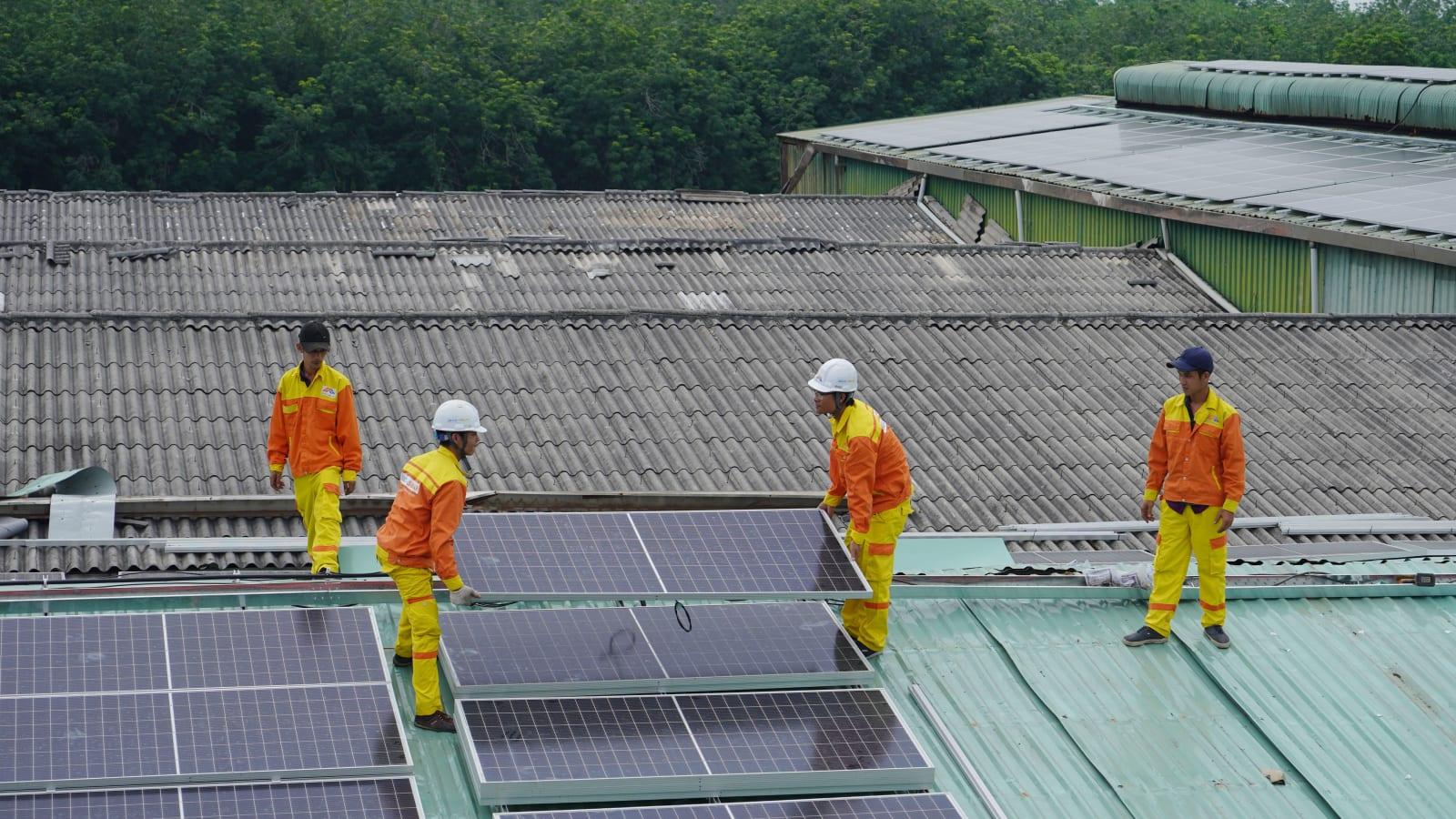
What makes this year's Bulan Energy more than an internal messaging exercise is the record KPI's refineries posted in 2025. According to Acting Corporate Secretary Milla Suciyani, KPI cut more than 450,000 tonnes of CO2 equivalent across its refinery operations that year, beating a cumulative target of 370,000 tonnes by roughly 80,000 tonnes, a performance of about 122 percent against plan. The reductions came through a mix of flare gas recovery systems, carbon capture and utilization projects, and solar power installations across the refinery network, according to the same report. That is not a projection or a stated ambition. It is an audited result from the same corporate entity running this year's campaign, at the same refineries, under the same broad banner of energy discipline.
A group-wide pattern, not an isolated campaign
KPI's refining arm is not the only part of Pertamina's business posting hard efficiency numbers. PT Pertamina Geothermal Energy (PGE) reported energy savings of 90,502.28 megawatt hours across 2025, more than double the 40,058.77 megawatt hours it saved in 2024, a gain PGE Director of Operations Andi Joko Nugroho attributed in part to debottlenecking work at its Ulubelu field and wider use of vacuum pump technology. Further upstream, PT Pertamina Hulu Energi (PHE) posted cost efficiency of US$635 million in 2025 through its sixth-year Optimus program, against an original target of US$250 million, a result PHE said accounted for roughly 57 percent of total cost optimization recorded across the wider Pertamina group that year.
Read together, these are three different subholdings, measuring three different things, in three different units: tonnes of carbon, megawatt hours of electricity, and dollars of avoided cost. Sirkularium is not collapsing them into a single figure, since they are not directly comparable. What they do show, taken side by side, is that Pertamina's efficiency push in 2025 was not confined to one business line or one facility. It ran from upstream production through geothermal generation to downstream refining, and each unit that reported a number beat the target it had set for itself.
Why the discipline matters more than the slogan
Indonesia's industrial decarbonization push has increasingly moved from aspiration to obligation. Ministry of Energy and Mineral Resources Regulation Number 8 of 2025 already requires facilities with significant energy consumption, industrial plants among them, to undergo periodic energy audits at least once every three years, with savings recommendations that must be implemented and reported annually. State-owned enterprises the size of Pertamina's refining, upstream and geothermal units sit squarely inside the population that regulation is meant to reach. A worker-facing campaign like Bulan Energy, paired with the kind of audited, target-beating results KPI, PGE and PHE each reported for 2025, is one visible way a major state enterprise demonstrates that the culture behind an energy audit requirement can produce results that outlast the audit cycle itself.
There is also a signaling function worth noting. Government stakeholders assessing whether Indonesia's largest state-owned energy company treats efficiency as a genuine operating priority, rather than a compliance checkbox, have a concrete data point in KPI's 122 percent performance against its 2025 emissions target. A repeat or improvement on that figure when 2026 results are eventually reported would be a stronger signal still.
What to watch next
The practical marker for outside observers is whether KPI, PGE and PHE publish 2026 results that match or exceed what they delivered in 2025, and whether Bulan Energy & Loss 2026 produces any specific, quantified commitments once this year's campaign concludes, the way some of Pertamina's other internal programs, including Kilang Plaju's own Idea Generation innovation competition in past years, have generated named projects with tracked savings. For government and public institutions overseeing Indonesia's industrial decarbonization roadmap, Pertamina's refinery network offers a useful reference case: a facility population large enough, and diverse enough across upstream, midstream and downstream operations, that its year-over-year efficiency results function as an early proxy for how the broader mandatory energy audit regime might perform once it reaches full coverage across the country's energy-intensive industries. Financing institutions structuring green loans or sustainability-linked instruments for state enterprises may also find KPI's audited emissions figure a more durable benchmark to reference than campaign announcements alone.
Sources
- ANTARA News Sumsel, Kilang Plaju Palembang dorong efisiensi energi lewat Bulan Energy & Loss 2026
- Sumeks Disway, Sambut Bulan Energy & Loss 2026, Kilang Plaju Perkuat Budaya Efisiensi dan Optimasi Loss
- Palpres Disway, Sambut Bulan Energy dan Loss 2026, Kilang Plaju Genjot Efisiensi dan Optimasi Loss Lewat Digitalisasi
- Investortrust, Lampaui Target, Kilang Pertamina Tekan Emisi 450.000 Ton CO2eq
- Pojok Papua, Pertamina Geothermal Energy Hemat Energi 90.502 MWh Sepanjang 2025
- Kontan, PHE Klaim Berhasil Cetak Efisiensi US$ 635 Juta pada Tahun 2025