Lampung gains a working bioethanol laboratory as the E5 mandate moves from policy to supply
By Sirkularium Editorial Team, 9 min read

Pertamina New & Renewable Energy launched a Bioethanol Development Center in Tegineneng, Pesawaran Regency, Lampung on 14 September 2026, paired with a provincial cooperation agreement and an international research memorandum. The pilot plant is deliberately small at 60 kilolitres a year, built to prove feedstock, process and yield before capital commits at scale.
Indonesia's bioethanol programme has not lacked targets. What it has lacked is a place where the assumptions behind those targets can be tested in the open, on real land, with real equipment, before the numbers harden into procurement contracts. On Monday 14 September 2026, that place opened in Tegineneng, Pesawaran Regency, Lampung.
A pilot plant, a planting and two signatures
Pertamina New & Renewable Energy launched its Bioethanol Development Center on a 10 hectare site inside a planned 20 hectare complex at Masgar. The launch combined three things in one morning: the start of construction, a symbolic sorghum planting, and the signing of two agreements.
Todotua Pasaribu, Deputy Minister of Investment and Downstreaming and Deputy Head of BKPM, attended alongside Mochamad Iriawan, Board Chair of PT Pertamina (Persero), and Ahmad Siddik Badruddin, the company's Director of Risk Management. John Anis, Chief Executive of Pertamina NRE, presented the facility's technical design. Rahmat Mirzani Djausal, Governor of Lampung Province, signed on behalf of the province. Nandi Julyanto, President Director of PT Toyota Motor Manufacturing Indonesia, and Toru Murakami, President Director of PT Toyota Tsusho Indonesia, signed the second agreement.
The first agreement binds Pertamina NRE and the Lampung provincial government around agribusiness development, energy security and food resilience together. The second is a memorandum of understanding between Pertamina NRE, TMMIN, Toyota Tsusho Indonesia and the Research Association of Biomass Innovation for Next Generation Automobile Fuels, known as raBit, to explore the technical and commercial potential of sustainable bioethanol production and use in Indonesia. Lampung University is also engaged on the research side.
Iriawan framed the day as more than the construction of a facility. In his account it is a concrete step toward national energy independence and resilience, built on domestic feedstock rather than imported volume.
Why sorghum, and why two generations at once
The headline capacity is 60 kilolitres a year. That figure invites a shrug until its purpose is clear. This is a pilot scale unit, designed to validate a process chain rather than to supply a market. It runs the full sequence that a commercial plant would run: pre-treatment, hydrolysis, fermentation, distillation and dehydration. Reporting on the site also describes a production configuration of two trains at 30,000 kilolitres a year as the scale the complex is being prepared for.
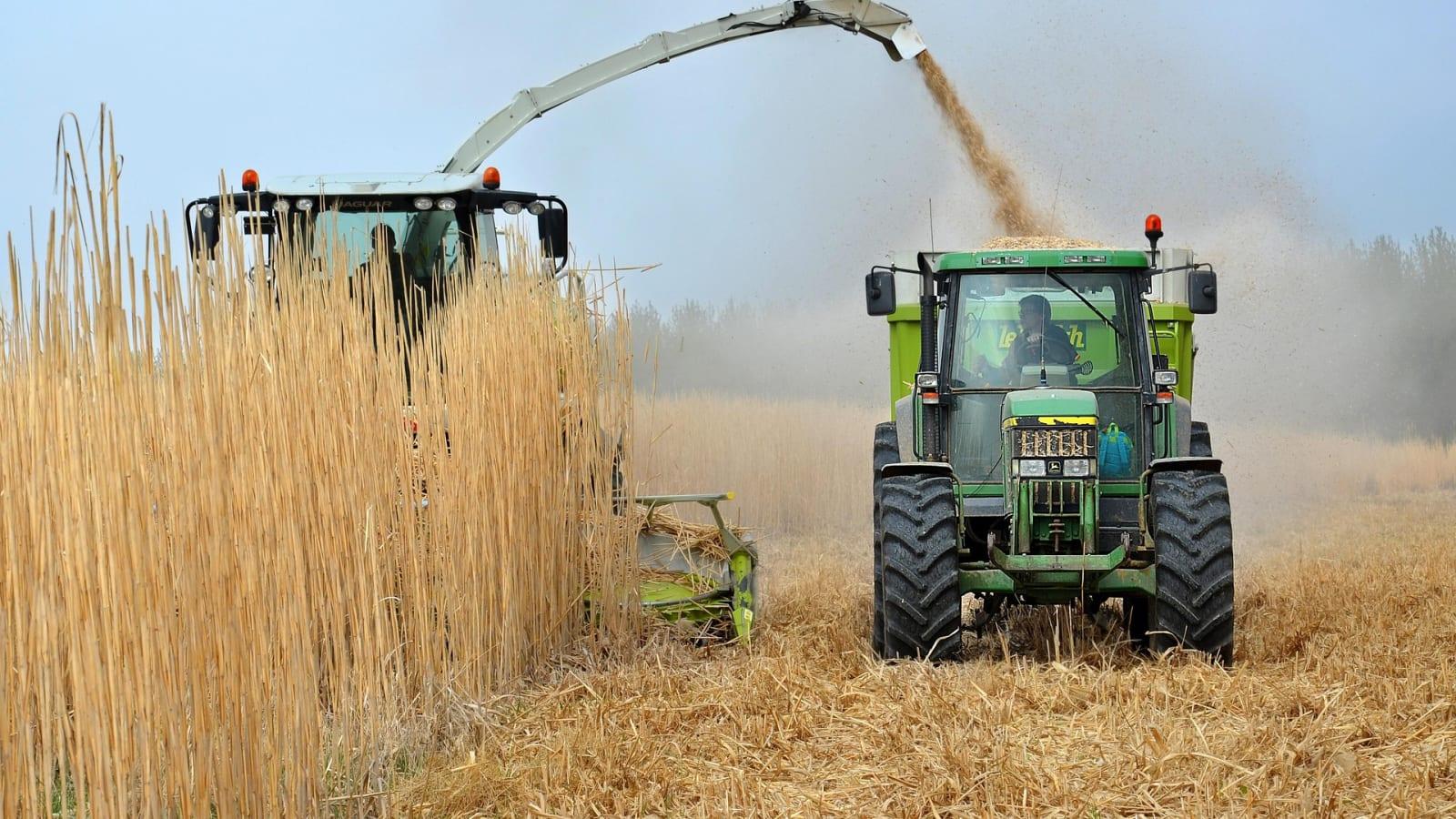
Sorghum leads the feedstock list, with cassava and corn developed in parallel. John Anis pointed to the agronomy rather than the chemistry. Sorghum completes a cycle in roughly 90 days, which allows up to three harvests a year on the same plot.
The appeal of sorghum, beyond its productivity, is that it can be harvested three times in a single year.
The more interesting design choice is the decision to run first generation and second generation routes side by side. In the first generation route, sorghum juice is fermented directly into ethanol, with a projected yield of about 2.5 kilolitres per hectare. In the second generation route, the residual biomass left after juicing becomes the feedstock, with a potential of about 4.7 kilolitres per hectare. One plant, one harvest, two product streams, and a residue that carries value instead of cost.
For an institution working on the circular economy, that second stream is the part worth watching. It converts an agricultural residue into a fuel input, and it does so on the same site where the residue is generated, which removes the transport penalty that usually makes biomass valorisation marginal.
The demand that supply has to meet
The facility arrives against a firm policy calendar. The Ministry of Energy and Mineral Resources has set the mandatory five percent bioethanol blend, known as E5, to take effect in the second half of 2026 under Ministerial Regulation No. 4/2025, applied first across Java and to non-subsidised gasoline. Eniya Listiani Dewi, Director General of New Energy, Renewable Energy and Energy Conservation, has confirmed that all fuel business entities are required to blend under that regulation. A ten percent blend, E10, follows from 2028.
The volumes that Indonesia has absorbed so far are modest, and honestly so. Bioethanol taken up through Pertamax Green 95 rose from 80 kilolitres in 2023 to 357 kilolitres in 2024 and 812 kilolitres in 2025. Set that against national gasoline consumption of roughly 36 million kilolitres a year, and against the presidential target of 1 million kilolitres of bioethanol a year, and the shape of the task becomes clear. The programme does not need a marginal improvement in existing supply. It needs a new supply base.
One figure deserves care. Across the coverage of 14 September, the number 430,000 appears in two different forms. CNBC Indonesia and Netizenku report it as 430,000 hectares of land designated for the bioethanol strategy within Lampung's roughly 3 million hectares of agricultural land. The English edition of ANTARA and Warta Ekonomi report it as 430 thousand kilolitres of bioethanol capacity associated with Lampung. Both readings are plausible, and they are not equivalent. Institutions building plans on this figure should confirm which quantity is meant before it enters a feasibility model.
A provincial ecosystem rather than a single plant
The structure of the day matters as much as the plant. A pilot facility alone would be a corporate research asset. A pilot facility launched together with a provincial agreement on agribusiness, a farmer income pathway and an automotive research memorandum is something closer to an ecosystem under construction.
Todotua Pasaribu placed the initiative in that frame, describing bioethanol development as an ecosystem that links agriculture, industry and technology. He also noted that Indonesia holds feedstock diversity across sorghum, cassava and corn comparable to established producers such as Brazil.
Governor Rahmat Mirzani Djausal spoke to the provincial economics. Sorghum, in his account, shows strong potential to raise farmer income and strengthen provincial growth, which is the variable that determines whether planting continues after the launch coverage fades. The Toyota side of the arrangement supplies the other end of the chain. Vehicle manufacturers and trading houses validating fuel quality and engine compatibility is how a blend specification becomes credible to consumers.
Sirkularium's read for government and public institutions
Three practical points follow for policy and implementation teams.
First, a pilot plant is a governance instrument, not only an engineering one. The 60 kilolitre unit will generate measured yields, conversion rates and residue ratios that can replace estimates in provincial and national planning. Public institutions should ask for that data in a usable form, and should fund the extension services that carry agronomic findings to smallholders.
Second, offtake certainty is the bankability lever. The E5 mandate creates a defined demand floor, and the E10 step extends it. Clarity on blending obligations, pricing mechanisms and feedstock standards will do more to attract processing investment than any single incentive, because it changes the risk profile of a plant before it is financed.
Third, land use and traceability safeguards belong in the design phase. The second generation route is attractive precisely because it uses residue rather than requiring additional land, and that advantage holds only if residue sourcing is documented. Provinces adopting the Lampung model should build traceability into their permitting from the start rather than retrofitting it later.
What to watch next: the geographic rollout of E5 through the second half of 2026, the confirmed meaning of the 430,000 figure in Lampung's planning documents, the first measured yields from Tegineneng, and the per-subsector industrial decarbonization regulations that the Ministry of Industry has signalled for staged release. Taken together, they will show whether Indonesia's bioethanol ambition is converting into installed, verified capacity.
Bioethanol absorbed by Pertamax Green 95
Values in kL
Sources
- ANTARA News English, Govt builds bioethanol center in Lampung to bolster energy security
- ANTARA News, Pertamina NRE pacu pengembangan bioetanol berbasis multi-feedstock
- CNBC Indonesia, Pertamina NRE Resmi Luncurkan Bioethanol Development Center
- Warta Ekonomi, Pertamina NRE Dorong Pengembangan Bioetanol Berbasis Multi-Feedstock dan Multi-Generation
- ANTARA News Banten, Kemandirian energi, Pertamina bangun pusat pengembangan Bioethanol di Lampung
- Netizenku, Lampung Mulai Bangun Ekosistem Bioetanol untuk Perkuat Ketahanan Energi Nasional
- Kontan, Mandatori E5 Berlaku Semester II-2026, Bensin di SPBU Bakal Dicampur Bioetanol 5 Persen