Indonesia's drought response has reached 3,288 locations, and the figures show what a litre of reliable supply is worth
By Sirkularium Editorial Team, 8 min read
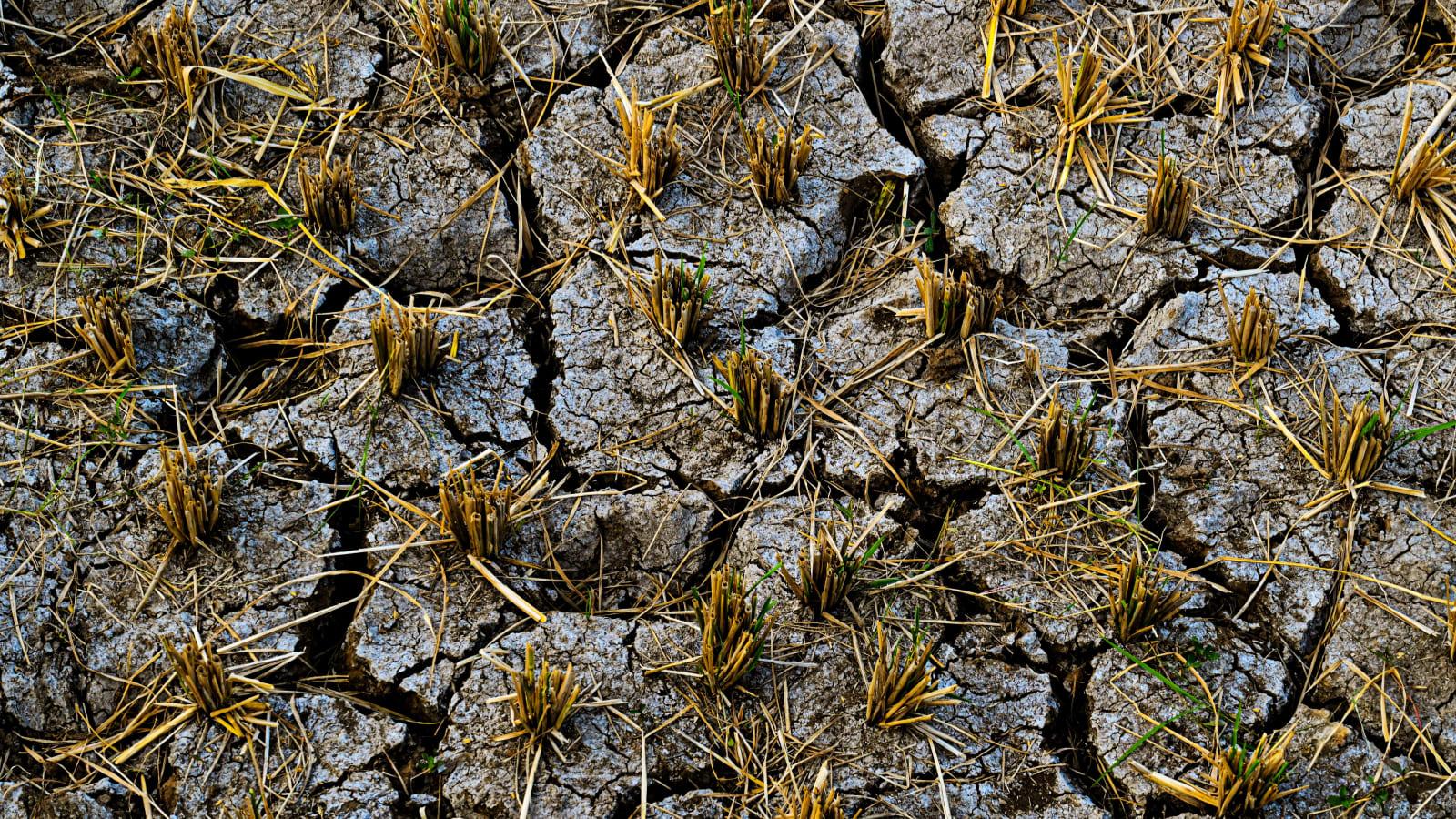
The Ministry of Public Works reported on 26 September 2026 that it had handled 3,288 drought locations since July, distributing 48.9 million litres of clean water to about 1.75 million people and protecting 141,440 hectares of rice fields. Minister Dody Hanggodo said the ministry will add more mobile water treatment units as El Niño extends the dry season.
Indonesia's dry season is running longer than usual this year, and the Ministry of Public Works has spent the past three months responding to it location by location. On Saturday 26 September 2026, after inspecting drought conditions in Bekasi and Cirebon, West Java, Minister of Public Works Dody Hanggodo announced that the ministry will expand its fleet of mobile water treatment plants, known as IPA bergerak, to serve settlements that cannot rely on boreholes.
The announcement came with a detailed operational record. Reported by ANTARA, Liputan6, Ipol.id and KabarPublik, the ministry's data to 24 September shows 3,288 drought locations handled nationwide since July, 48.9 million litres of clean water distributed, about 1.75 million people served and 141,440 hectares of rice fields protected from harvest failure. That is a substantial logistical achievement, and it also provides something water planners rarely get during an emergency: a clear, quantified picture of what drought costs to manage.
The response in numbers
The 3,288 locations fall into three groups. Residential areas account for 2,553, of which 2,077 had been completed and 476 were still in progress. Agricultural areas account for 358, with 272 completed and 86 in progress. A further 377 locations involved support for forest and land fire handling, where water infrastructure helps firefighting teams.
Those figures translate into completion rates of about 81 percent for residential locations and 76 percent for agricultural ones, by Sirkularium's calculation from the ministry's counts. For an operation spread across thousands of sites and still expanding as new areas report shortages, that is a strong position, and the remaining locations give a clear, trackable list of work for the weeks ahead.
The tools vary by place. In West Java alone, the ministry distributed 286,000 litres to ten affected districts between 7 July and 22 September, using 21 tanker trucks of 4,000 litre capacity and 26 public hydrant tanks of 2,000 litres, serving 57,200 people. Elsewhere the response includes deep wells drilled beyond 50 metres and mobile treatment units that can draw on rivers or other surface sources.
"Drought management must be carried out quickly, in a measured way and in an integrated way, so that people's water needs remain met and agricultural productivity is maintained." Dody Hanggodo, Minister of Public Works
The minister noted that mobile treatment units are especially important where groundwater is limited, citing Pontianak as an example. The ministry is also completing a study of longer term drought solutions for settlements, agriculture and fire prevention, due this year alongside procurement of additional mobile units. An El Niño task force is monitoring dams, reservoirs and irrigation networks, with dry conditions expected to continue into November.
Why the season is running long
The Meteorology, Climatology and Geophysics Agency (BMKG) explained the background on 22 September. The El Niño index reached plus 2.83 in August, in the very strong range, and the Indian Ocean Dipole is trending positive. BMKG expects the 2026/2027 rainy season to arrive late in 529 of Indonesia's 866 season zones, or 61.08 percent, with onset concentrated in November and December. In 482 zones the rainy season is expected to be shorter than normal.
That context matters for planning. An emergency response sized for a few weeks is being asked to cover several months, and the regions under pressure are shifting. Andi Iwan Darmawan Aras, Deputy Chair of Commission V of the House of Representatives, said on 26 September that complaints about water supply in Makassar had risen sharply over the past week, and urged the Ministry of Public Works and BMKG to accelerate mitigation from upstream to downstream rather than waiting for shortages to spread. He also called for continued evaluation of the SPAM Regional Mamminasata system that serves the Makassar area.
What a litre of reliable supply is worth
The ministry's figures invite a simple comparison that helps explain why permanent infrastructure is the long term answer. Dividing 48.9 million litres by 1.75 million people gives roughly 28 litres per person across the whole response period. This is a Sirkularium calculation from the published totals, and it is not a daily ration: many beneficiaries were served over days or weeks, and some received water through several channels. What it shows is that emergency distribution is, by design, a bridge. It keeps households supplied through the worst weeks, but it cannot carry the volume a settlement uses in normal life.
Permanent systems operate on a different scale. The first phase of SPAM Regional Mamminasata, completed by the ministry in September, has a treatment capacity of 500 litres per second. At full output that is 43.2 million litres a day, close to the entire volume distributed in the national drought response over three months. Its production and transmission works cost Rp313.7 billion for capacity to serve 40,000 household connections, around Rp7.84 million per connection, as Sirkularium set out on 9 September.
Put side by side, the two figures describe the value of reliability. Every connection that a permanent system can serve during a dry season is a household that does not need a tanker, a hydrant tank or a mobile unit. The cost avoided in emergency logistics, together with the protected health, productivity and harvests, is part of the economic return on piped supply, even though it rarely appears in project appraisals.
Sirkularium's view
Sirkularium reads the ministry's response as a well organised operation that has kept 1.75 million people supplied and protected more than 141,000 hectares of rice through an exceptionally long dry season. The decision to expand mobile treatment capacity is sensible, since these units can be moved to wherever the next shortage appears and they treat local surface water rather than depending on trucked supply.
The richer opportunity lies in the data the response has generated. For government and public institutions, three steps would turn this season's experience into better investment decisions. First, recording the cost of each emergency channel, per litre delivered and per person served, would give a reference figure for the value of avoided emergency spending. Second, mapping drought response locations against existing and planned SPAM service areas, using GIS, would show where permanent connections would most reduce future emergency demand. Third, including avoided drought response costs in the economic appraisal of regional water systems would give ministries and regional governments a fuller case for projects such as Mamminasata's later phases.
What to watch next: the completion of the remaining 476 residential and 86 agricultural locations, the number of mobile units added under the new procurement, the ministry's long term drought study due this year, and how quickly the Makassar area's supply stabilises as BMKG's forecast rains arrive in November and December.
Drought locations handled, by type
Values in locations
Sources
- ANTARA News, Kementerian PU perbanyak IPA bergerak tangani kekeringan permukiman, 26 September 2026
- Liputan6, Darurat kekeringan, Kementerian PU salurkan 48,9 juta liter air bersih, 26 September 2026
- Ipol.id, Hadapi kekeringan, Kementerian PU selamatkan 141.440 ha sawah dan penuhi kebutuhan air bagi 1,75 juta jiwa, 25 September 2026
- KabarPublik, Kementerian PU perbanyak IPA bergerak untuk atasi kekeringan, 26 September 2026
- ANTARA News, Komisi V minta mitigasi air bersih harus dilakukan tanpa tunggu krisis, 26 September 2026
- BMKG press release, El Niño sangat kuat sedang terjadi, musim hujan 2026/2027 diprediksi datang lebih lambat, 22 September 2026
- RRI, Kementerian PU tuntaskan SPAM Mamminasata, siap layani 40.000 sambungan rumah, 9 September 2026