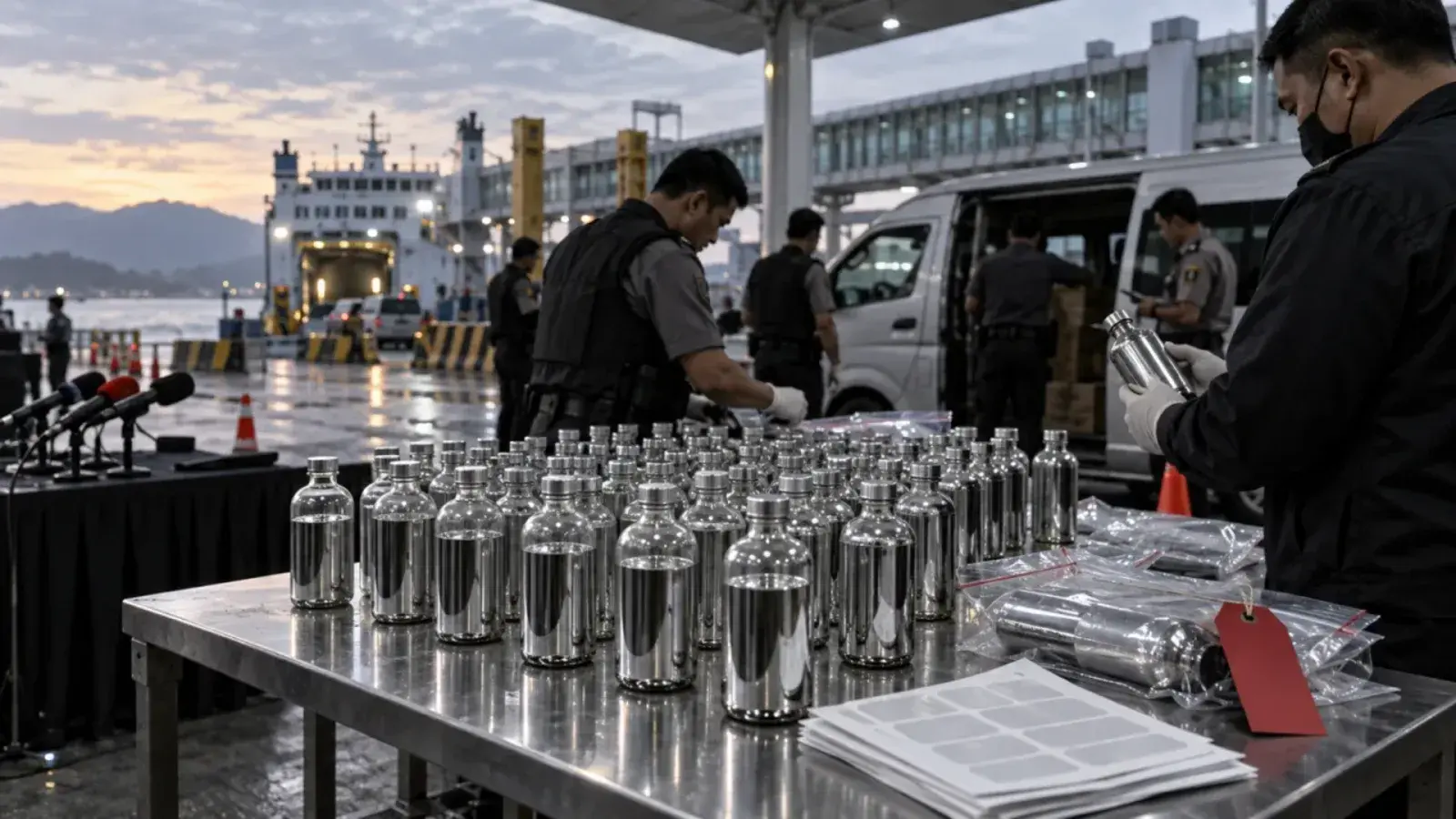
A dry season at Morowali shows that river water is part of the value of Indonesian nickel
By Sirkularium Editorial Team, 8 min read
Smelters at the Indonesia Morowali Industrial Park began cutting nickel pig iron output by 30 to 40 percent on 22 September 2026 as El Niño reduced river flow. The episode puts a number on something mining valuations usually leave out: the economic worth of a reliable water supply.
What happened at Morowali
The Indonesia Morowali Industrial Park (IMIP) in Central Sulawesi, the largest nickel processing complex in the country, told its tenant companies over the weekend of 19 and 20 September 2026 that they would need to reduce nickel pig iron (NPI) production because of a water shortage. According to Shanghai Metals Market (SMM), the rotary kiln electric furnace (RKEF) plants in the park began lowering their operating load by roughly 30 to 40 percent from previous levels on Tuesday, 22 September.
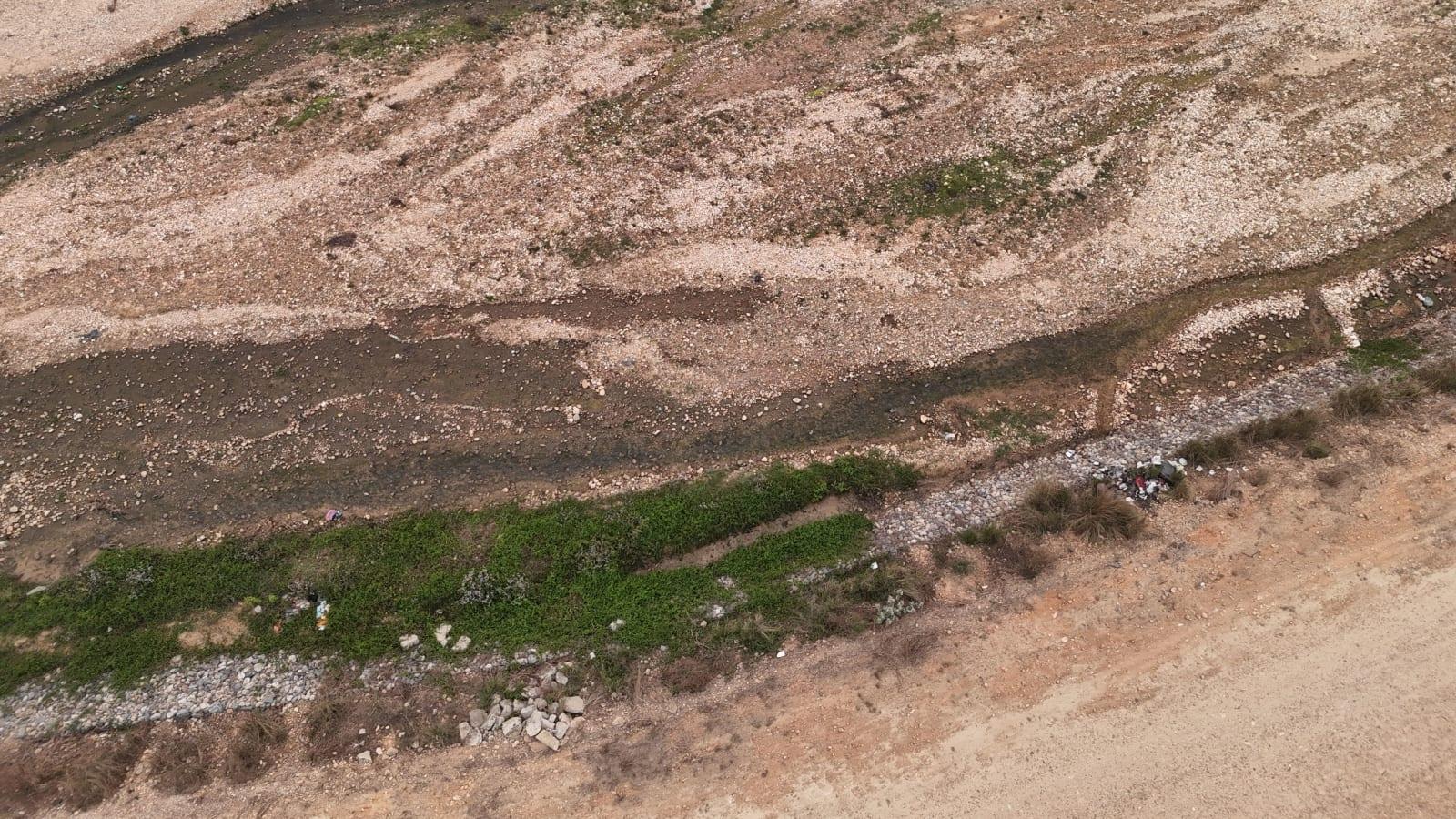
The cause is climatic rather than commercial. El Niño has brought a longer and drier season to Bahodopi District in Morowali, and the rivers that supply the park are running low. SMM reports that IMIP draws its water from the Makarti River under a permit allowing a maximum abstraction of 1.5 cubic metres per second. Rainfall at the site in August 2026 was less than 4 millimetres, against a historical August average of 222 millimetres.
IMIP handled the episode with advance notice. As early as 4 September, Dedy Kurniawan, Head of Media Relations at PT IMIP, said that El Niño could reduce production potential by around 30 to 40 percent, and that management and Eternal Tsingshan were accelerating the use of new water sources around the park. On 23 September he confirmed that several smelters had lowered output, including NPI. Reporting on the cut noted that operations had not stopped and that the workforce had not been reduced.
"This condition is what has affected several smelters in the IMIP area, which have seen declines, including in NPI production." Dedy Kurniawan, Head of Media Relations, PT IMIP, speaking to Bloomberg Technoz (Sirkularium translation).
The numbers behind the cut
Bloomberg reported that the curtailment could affect around 100,000 tonnes of NPI, against installed capacity of about 4.2 million tonnes a year, or 350,000 tonnes a month. IMIP said it had not yet received exact figures from its tenants and could not confirm the 100,000 tonne estimate. SMM offered a narrower, time-bound estimate: if the current operating rate holds for half a month, physical NPI output would fall by 50,000 to 70,000 tonnes, equivalent to 5,500 to 7,700 tonnes of contained nickel.
The two estimates measure different things and should be read side by side rather than as a contradiction. The Bloomberg figure describes the total volume in scope. The SMM figure describes the likely loss over a defined fifteen day window. Both depend on how quickly river flow recovers.
Prices give a sense of scale. SMM recorded Indonesian NPI at an FOB average of US$135 per metric tonne unit of nickel shortly before the cuts, down 6.57 percent. A metric tonne unit is ten kilograms of contained nickel, so that price corresponds to about US$13,500 per tonne of nickel in NPI form. On Sirkularium's indicative arithmetic, applying that price to SMM's half-month range gives a production value of roughly US$74 million to US$104 million. That figure is an order of magnitude, not a forecast, but it shows how much economic output rides on one river's flow over two weeks.
The market context softens the immediate effect. SMM notes that stainless steel demand in China is subdued, with October 300 series output expected to fall by more than 100,000 tonnes month on month, and that Chinese port NPI stocks rose 52.5 percent to 53.8 thousand tonnes of contained nickel between 3 and 17 September. On the London Metal Exchange, nickel had fallen about 18 percent from its early May peak before the news, and Bloomberg noted that the cut could help arrest that slide.
Why water belongs in the valuation of mining
Most valuations of a nickel operation start with ore reserves, grade, recovery, processing capacity and price. Water appears, if at all, as an operating cost line: pumping, treatment, permits. The Morowali episode shows that this treatment understates its role. When water is short, capacity cannot be used, and the value of the ore in the ground is deferred.
Water serves several functions inside an integrated park. IMIP has explained that its supply supports hydrometallurgical high pressure acid leaching (HPAL) smelters, coke production, and the steam power plants that feed the smelters. An RKEF line needs cooling water; a power plant needs make up water; a leach circuit needs process water. A shortfall in one river therefore reaches several stages of the value chain at once.
This is where ecosystem services valuation becomes practical rather than academic. The flow in the Makarti River at the permit point depends on the condition of its catchment: forest cover, soil infiltration, and the way upstream land is used. A catchment that holds and releases water slowly is providing a service with a measurable economic value, and the Morowali numbers give that value a reference point. Indonesia already has the methodological tools to express such values in rupiah, including the economic valuation approach in Permen LH No. 7 Tahun 2014, which covers ecological damage, environmental economic loss and recovery cost.
The same logic applies to planning documents. An AMDAL for a smelter or an industrial park includes a water balance and an assessment of the raw water source. Pairing that water balance with a dry year scenario, informed by GIS based catchment mapping and river gauging data, lets operators and regulators see in advance how much production is at risk in an El Niño year and what investment in storage, recycling or alternative sources would be worth.
A season that will run longer
The weather outlook suggests the question will remain live for several weeks. BMKG has classified the current El Niño as very strong, with an ENSO index of +2.63 for July to September and a Niño 3.4 sea surface temperature anomaly of +2.83 degrees Celsius, combined with a positive Indian Ocean Dipole. The agency expects the 2026/2027 rainy season to arrive late in 529 of Indonesia's 865 season zones, 61.08 percent of the total, with most regions starting in November or December 2026.
BMKG Head Teuku Faisal Fathani has said that the combination of El Niño and the Indian Ocean Dipole will worsen and prolong dry periods, and the agency has recommended water conservation, closer drought monitoring and optimised reservoir management across sectors. That guidance, issued in advance, gives industrial parks a clear planning window, and IMIP's early statement on 4 September shows that the warning is being heard.
The constructive reading is that Indonesia's downstream nickel industry is now large enough for its resource dependencies to be measured with the same care as its output. The episode has not led to layoffs, operations continue at reduced load, and the park is already developing additional water sources.
Sirkularium's view
For government and public institutions, the Morowali cut is a useful case study in how natural capital underpins downstream industrial value. It suggests three practical steps.
First, water security can be written into the economic valuation of mining and processing assets as a standard input. A valuation that includes the reliability of raw water supply, tested against dry year hydrology, gives a truer picture of the value that a park or smelter delivers to the regional and national economy, and of the royalty and tax base that depends on it.
Second, catchment condition deserves a place in AMDAL review and in reclamation and watershed rehabilitation obligations as an economic asset, not only an environmental one. GIS based land cover mapping combined with river gauging and ground data can show how much dry season flow a healthy upstream catchment supports. Valuing that flow with an accepted methodology, such as the approach in Permen LH No. 7 Tahun 2014, lets operators, the Ministry of Environment and regional governments agree on what protecting the catchment is worth.
Third, the investment case for water recycling, storage and alternative sources becomes easier to make when the value of production at risk is known. If two weeks of reduced output at one park can represent tens of millions of US dollars, measures that secure supply in El Niño years can be assessed against a clear benchmark.
Sirkularium's recommendation is that operators treat this kind of analysis as ongoing practice, updated each season and independently verified, rather than as a response to a single dry spell. What to watch next: tenant level production figures from IMIP, the pace at which new water sources come on line, the recovery of flow in the Makarti River as the delayed rains arrive, and whether other industrial parks in Sulawesi and Maluku report similar constraints.
IMIP nickel pig iron volumes in context
Values in tonnes of NPI
Sources
- Mining Weekly (Bloomberg), Indonesia nickel hub to cut production on El Niño-driven drought, 22 September 2026
- Bloomberg, Indonesia nickel hub to cut production on El Niño-driven drought
- Shanghai Metals Market, IMIP's water-related NPI cuts meet weak stainless steel demand
- Shanghai Metals Market, Indonesia nickel market update, 23 September 2026
- Bloomberg Technoz, Produksi NPI nikel di IMIP rentan anjlok 70.000 ton dalam 2 pekan
- Bloomberg Technoz, Produksi besi kasar nikel dikabarkan drop 100.000 ton, IMIP jawab
- Kaidah.ID, Dampak El Nino turunkan potensi produksi di kawasan IMIP hingga 40 persen, 4 September 2026
- BMKG press release, El Niño sangat kuat sedang terjadi, musim hujan 2026/2027 diprediksi datang lebih lambat