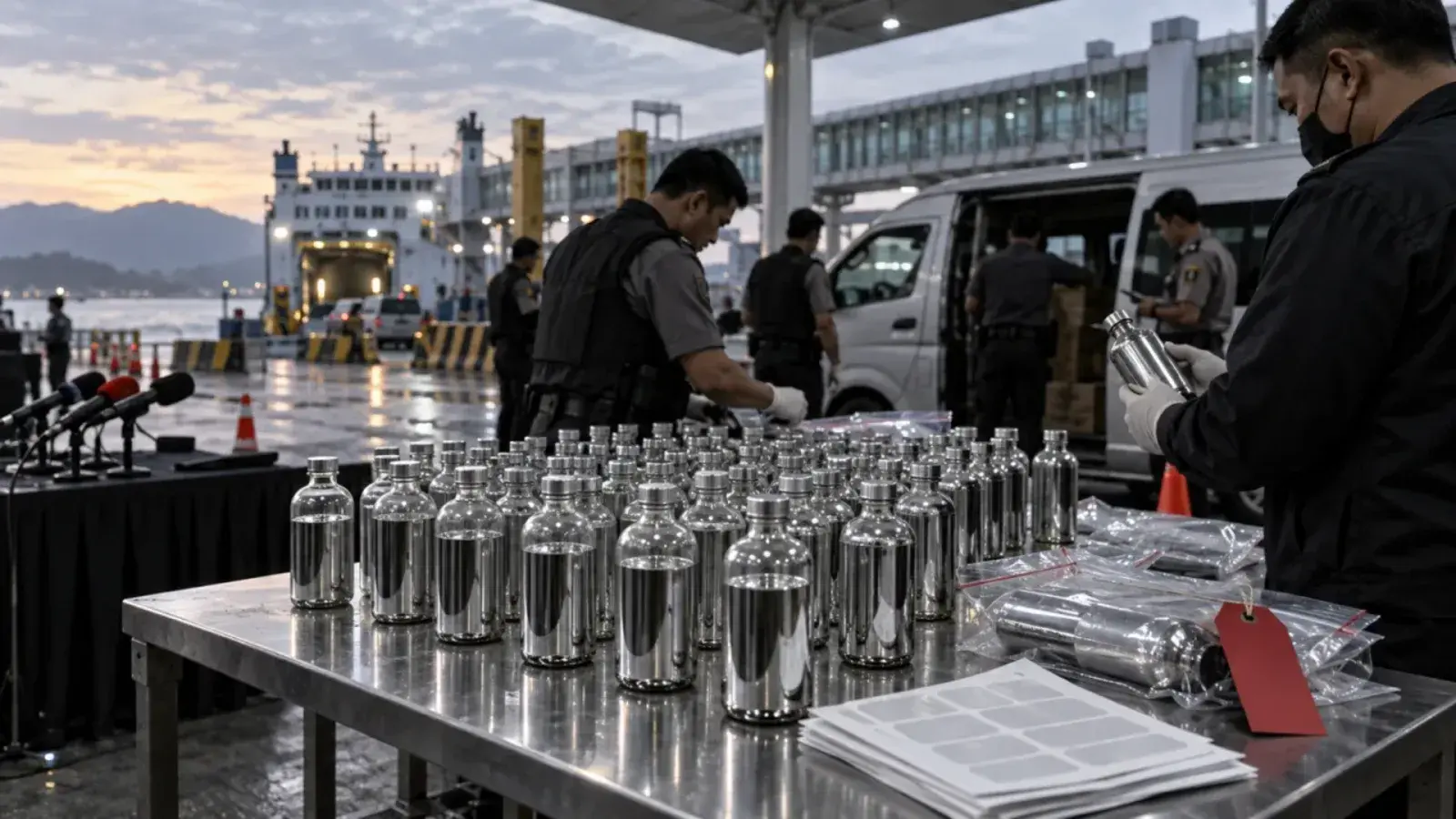
Nine tonnes of Gresik gold have reached Antam, turning a downstream plan into a measurable domestic flow
By Sirkularium Editorial Team, 8 min read
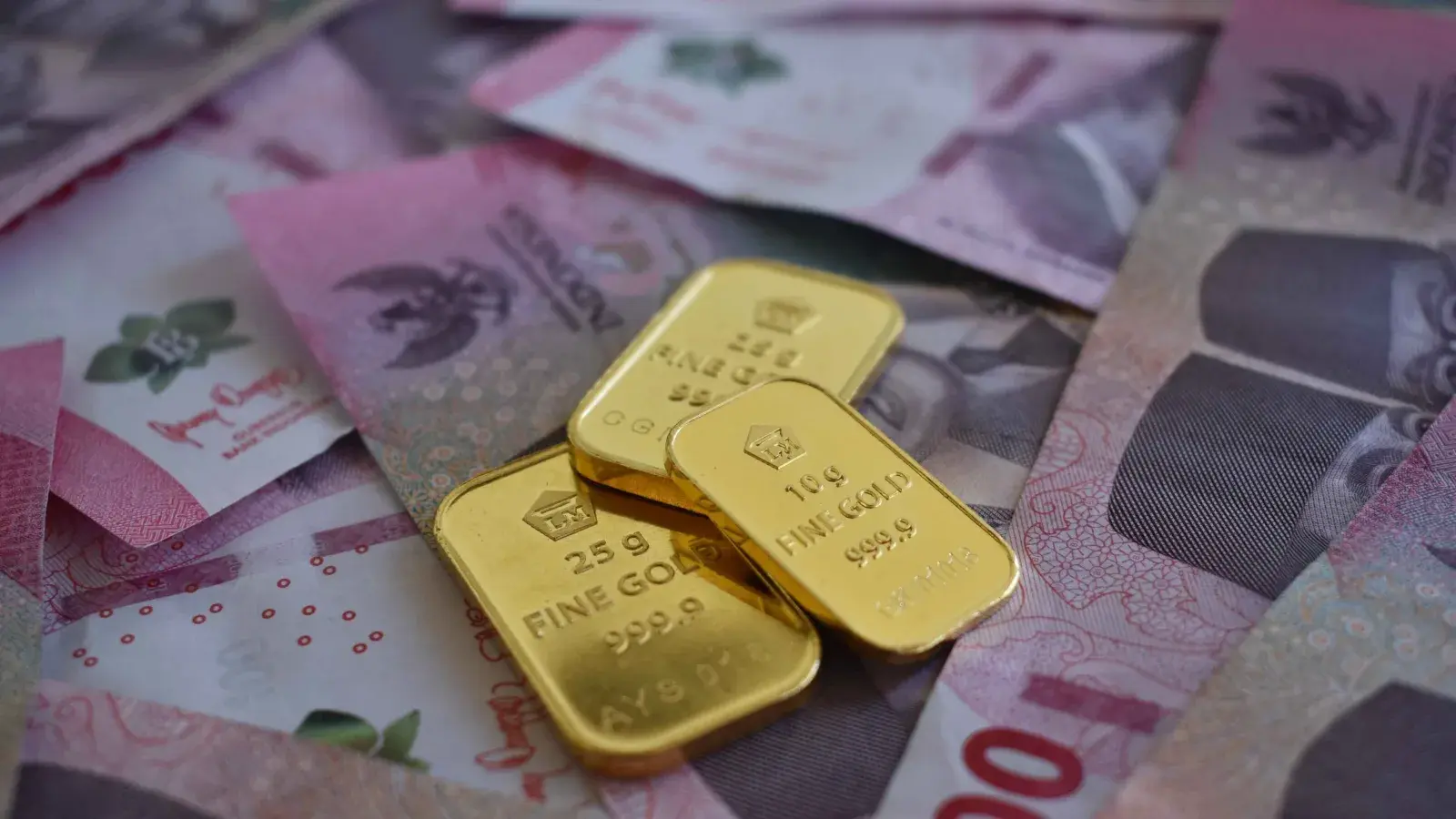
PT Aneka Tambang bought 9 tonnes of 99.99 percent gold from PT Freeport Indonesia's Gresik precious metals refinery between January and August 2026, the first realised figure against an agreement that allows up to 30 tonnes a year. A second domestic buyer, Hartadinata, took its first 50 kilograms in September.
For most of the past two years, the story of gold refined in Indonesia from Indonesian copper concentrate has been told in plans and capacities. On 26 September 2026 it acquired its first realised number. PT Aneka Tambang Tbk (Antam) reported that it bought 9 tonnes of gold from PT Freeport Indonesia (PTFI) between January and August 2026, all of it produced at PTFI's Precious Metals Refinery (PMR) in Gresik, East Java, at a purity of 99.99 percent.
The figure was carried the same day by ANTARA, CNN Indonesia, IDX Channel, Liputan6 and several other outlets, all drawing on the same company statement. It matters less as a headline than as a data point. A downstream policy is easiest to defend when the flows it creates can be counted, and this is the first time the Gresik gold flow has been counted in public.
From an agreement to a delivery record
The commercial frame was set earlier. Antam and PTFI signed a gold sale and purchase arrangement with capacity of up to 30 tonnes a year, reported by detikFinance in February 2025 when the first 125 kilograms changed hands and the arrangement was described as a five year agreement worth US$12.5 billion. The Gresik refinery itself is designed to produce around 50 tonnes of gold a year, alongside roughly 200 tonnes of silver and smaller quantities of platinum, palladium, selenium, bismuth and lead, according to figures PTFI President Director Tony Wenas set out in July 2026.
Untung Budiharto, President Director of Antam, placed the purchase inside the company's sourcing strategy.
"The realisation of 9 tonnes of gold purchased from PTFI from January to August 2026 shows Antam's commitment to keep increasing the use of gold sourced from within the country." Untung Budiharto, President Director, Antam
PTFI's own plan, reported by ANTARA Jawa Timur, was to direct roughly 26 tonnes of gold to Antam across 2026. Nine tonnes by the end of August is about 35 percent of that annual plan with two thirds of the year elapsed. That is a reasonable position given the timetable. PTFI had planned to restart its main Manyar copper smelter in September 2026, reaching 75 percent of capacity in the first half of 2027 and full capacity by the end of 2027, so the heavier part of the year's refinery output was always expected to arrive late. Sirkularium covered the smelter's return to cathode production on 16 September. The months from September to December will show how quickly the refinery tracks that ramp.
A domestic market with more than one buyer
The second development of the week is quieter but structurally significant. PT Hartadinata Abadi Tbk, a listed gold jewellery and bullion producer, signed a spot sale and purchase agreement with PTFI and took delivery of 50 kilograms of 99.99 percent gold, cast as 1 kilogram bars, at its Bandung facility on 16 September 2026, as reported by Bisnis.com and republished by the Indonesian Mining Association. President Director Sandra Sunanto said stronger access to raw material would let the company raise capacity and respond more flexibly to the market.
Fifty kilograms is small beside nine tonnes. What it signals is that Gresik gold is beginning to reach more than one domestic counterparty. A market with a single offtaker records one transaction price. A market with several gives a series of arm's length prices, and that series is exactly what a valuer, a tax authority or an auditor needs to confirm what a tonne of domestically refined gold is worth at the refinery gate.
Antam, for its part, already buys from a wide domestic network. The company lists PT Amman Mineral Nusa Tenggara, Merdeka Group, PT Citra Palu Minerals, PT Agincourt Resources, PT Sumbawa Jutaraya, PT J Resources Bolaang Mongondow and PT Indo Muro Kencana as suppliers alongside PTFI.
Putting a rupiah figure on the flow
Antam's first half report provides the reference point. The company sold 18,080 kilograms of gold in the first six months of 2026 for Rp50.39 trillion, up 1 percent from Rp49.68 trillion a year earlier, and gold accounted for about 80 percent of total net sales of Rp62.71 trillion. Its own mines produced 433 kilograms over the same period, a ratio Sirkularium examined on 2 August.
Dividing sales value by volume gives an average realised figure of roughly Rp2.79 billion per kilogram in the first half. Applied to 9,000 kilograms, that suggests the Gresik gold Antam has bought this year represents on the order of Rp25 trillion of sales value. This is an indicative Sirkularium calculation, not a reported number. It uses a half year average price, while the purchases span eight months of a moving gold market and Antam's own margin sits between purchase and sale. The direction, however, is clear: a flow worth tens of trillions of rupiah a year is now being refined, traded and recorded inside the country rather than across a border.
That is the point Erick Thohir, then Minister of State Owned Enterprises, made when the arrangement began, arguing that domestic absorption would save foreign exchange on the order of hundreds of trillions of rupiah over five years. With a realised volume now in hand, that estimate can start to be tested against actual deliveries rather than projections.
Why independent verification belongs in the picture
A third item from the same week completes the picture. PT Surveyor Indonesia, part of the IDSurvey holding, described a growing role in independent assurance for minerals and coal: quality and quantity verification, export verification, stock measurement by laser scanner, and trace metal analysis by ICP-MS across 23 laboratories and 18 coal and mineral work locations. Helmy Satria Yudha, Vice President of the company's coal and mineral strategic business division, said independent assurance strengthens the reliability of information and supports transparency in commodity trade.
Gold at 99.99 percent purity is among the easiest commodities to value per unit. The harder questions sit upstream: how much gold and silver is contained in each tonne of concentrate and anode slime, how recoveries compare with design, and how refinery output reconciles with mine production and royalty declarations. Those are measurement questions, and they are where independent assurance and valuation practice meet.
Sirkularium's view
Sirkularium reads the 9 tonne figure as a constructive milestone for Indonesia's downstream programme. It converts a capacity statement into a delivery record, and it arrives in the same week that a second domestic buyer entered the market and a state surveyor highlighted its assurance capability. Together these are the building blocks of a transparent domestic gold value chain.
For government and public institutions, three practical steps would strengthen that chain. First, a regular public series of refinery output and domestic offtake, monthly or quarterly, would let the value retained onshore be tracked against the 26 tonne plan and the 30 tonne agreement ceiling. Second, reconciling refinery output with concentrate assays and royalty records through independent verification would give the Ministry of Energy and Mineral Resources and the Ministry of Finance a consistent basis for revenue and value retention figures. Third, as more domestic buyers enter, recording arm's length transaction prices would provide a reference that supports both fiscal assessment and market confidence.
For mining companies, the lesson is the same one that runs through Sirkularium's valuation work. The economic contribution of a mine is most persuasive when it is measured, independently verified and reported as routine practice. The Gresik refinery has now produced its first public ledger entry. Watch the year end figure against the 26 tonne plan, the pace of the Manyar ramp into 2027, and whether further domestic offtakers follow Hartadinata.
Gresik gold: realised, planned and capacity volumes
Values in tonnes of gold
Sources
- ANTARA News, ANTAM serap 9 ton emas Freeport, perkuat rantai pasok, 26 September 2026
- CNN Indonesia, Antam serap sembilan ton emas Freeport hingga Agustus, 26 September 2026
- IDX Channel, Antam beli 9 ton emas Freeport sepanjang Januari hingga Agustus 2026
- Liputan6, Antam beli 9 ton emas dari Freeport hingga Agustus 2026
- Indonesian Mining Association (from Bisnis.com), Hartadinata amankan pasokan emas murni dari Freeport, 24 September 2026
- Indonesian Mining Association (from Bisnis.com), Holding IDSurvey tangkap peluang independent assurance di sektor mineral dan batu bara, 25 September 2026
- CNN Indonesia, Antam siap caplok 100 persen produksi emas dari smelter Freeport, 14 July 2026
- ANTARA News Jawa Timur, Freeport bidik produksi emas 26 ton untuk Antam pada 2026
- detikFinance, Freeport cetak emas 50 ton per tahun, 30 ton diborong Antam, 21 February 2025