One mine's half year shows where mining value is created, and how much of it now stays in Indonesia
By Sirkularium Editorial Team, 9 min read
PT Amman Mineral Internasional reported net sales of US$2.05 billion and net profit of about US$497.9 million for the first half of 2026 on 21 September. Copper cathode and refined gold made in West Sumbawa supplied US$974 million of that revenue, and a reserve restatement at Batu Hijau shows how much of a mine's stated value is set by assumptions rather than by geology.
A half year that reversed a loss
On 21 September 2026, PT Amman Mineral Internasional Tbk published its results for the first six months of the year. The figures describe one of the largest single period swings recorded by an Indonesian mining company in recent years. Net sales reached US$2.05 billion, against US$182.59 million in the same period of 2025. Gross profit was US$964.15 million, up from US$55.70 million. Net profit came in at about US$497.9 million, reversing a loss of US$148.72 million a year earlier.
Bloomberg Technoz reported the profit as Rp8.89 trillion, converting at an assumed rate of Rp17,857 to the dollar. IDX Channel published the same result as roughly Rp8.6 trillion on a different conversion, and added EBITDA of US$1.13 billion, an EBITDA margin of 55 percent and a net margin of 25 percent. Readers comparing coverage will find small differences in the headline profit number. Kabar Bursa and several market reports cite US$503.68 million, the figure attributable to the owners of the parent entity, while Suara published US$428.83 million. Sirkularium notes the discrepancy rather than resolving it, since public reporting does not make every reconciling line visible. The direction and the order of magnitude are identical in every version.
The balance sheet moved the same way. Total assets stood at US$13.80 billion, liabilities fell from US$8.43 billion to US$7.93 billion, and equity strengthened to US$5.86 billion. Chief Financial Officer Anthony Mathias reported that net debt fell 13 percent to US$5 billion as at 30 June 2026, while capital expenditure dropped to US$130 million as the major expansion projects reached completion. A company that spent several years building is now in the phase where the build is meant to pay.
Where the revenue came from
The revenue split is the part of this report that carries the most policy content. Of the US$2.05 billion in net sales, concentrate exports contributed US$1.078 billion, copper cathode US$663 million and refined gold US$311 million. The final concentrate cargo shipped in April 2026. From this point the company's revenue moves entirely to metal produced at its own smelter and precious metal refinery in West Sumbawa.
Nearly half of the half year's revenue, US$974 million, came from metal refined inside Indonesia rather than shipped out as concentrate. That is downstream policy expressed as a revenue line rather than as an intention.
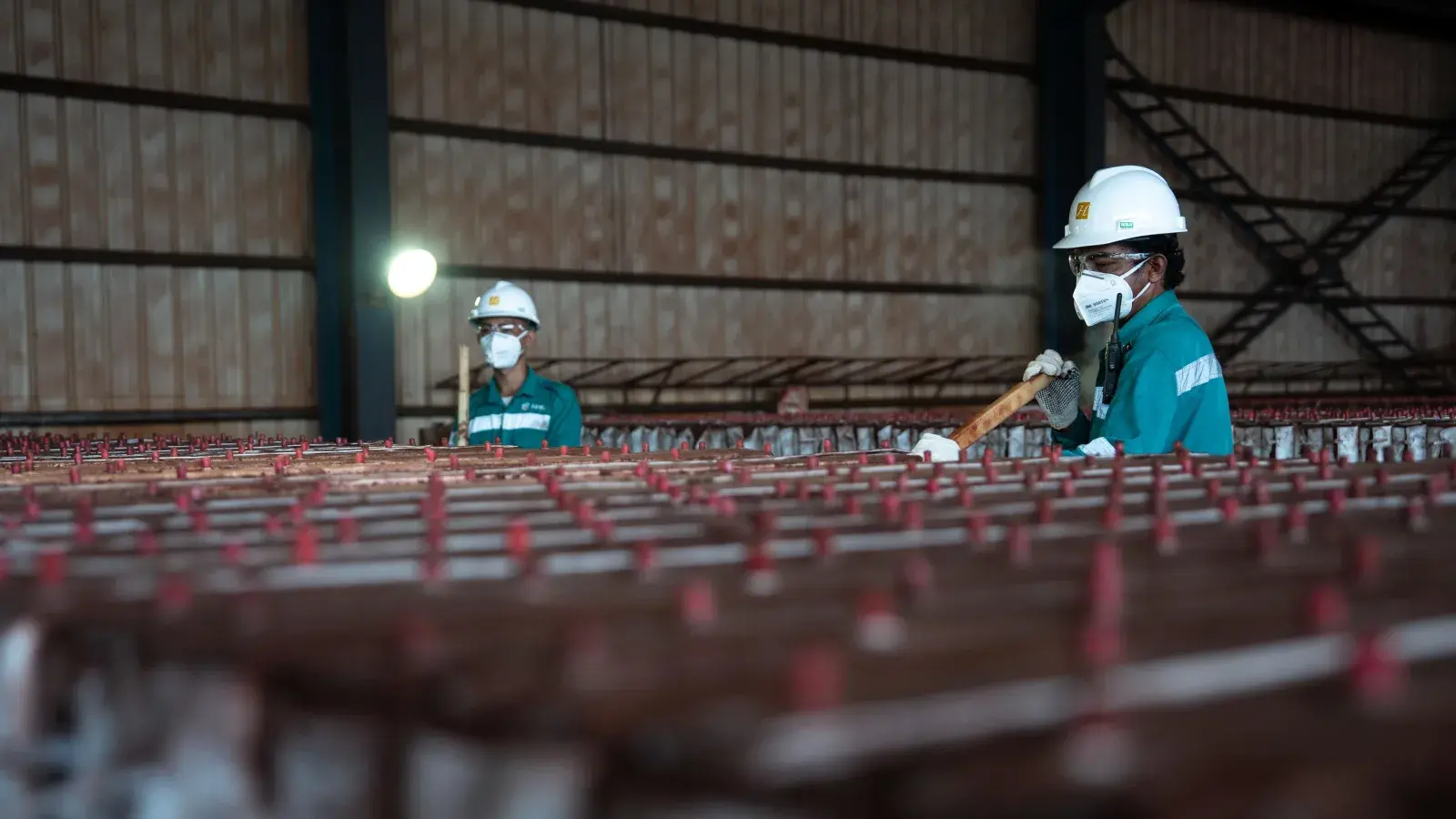
The facility behind that number is designed to process up to 900,000 tonnes of copper concentrate a year from Batu Hijau, with future feed from Elang, and to produce copper cathode, gold, silver, sulfuric acid and selenium. First copper cathode came in March 2025 and first refined gold in July 2025. The project acceptance certificate was signed on 18 July 2026 with China Nonferrous Metal Industry's Foreign Engineering and Construction Co. at its Beijing headquarters. President Director Arief Sidarto described the completion as an important milestone for the company and tied it to the national downstream agenda.
Guidance for the remainder of the year sets copper cathode at 130,000 tonnes and gold bars at 350,000 ounces, against 49,000 tonnes and 122,000 ounces achieved in the first half. Company statements point to consistent smelter performance and record output during July and August 2026. For government stakeholders the relevant observation is simple. The share of a mine's value that is recognised, taxed and employed in Indonesia rises when the metal is finished here, and that shift is now visible in a single company's income statement rather than argued in the abstract.
The reserve figure that moved without new drilling
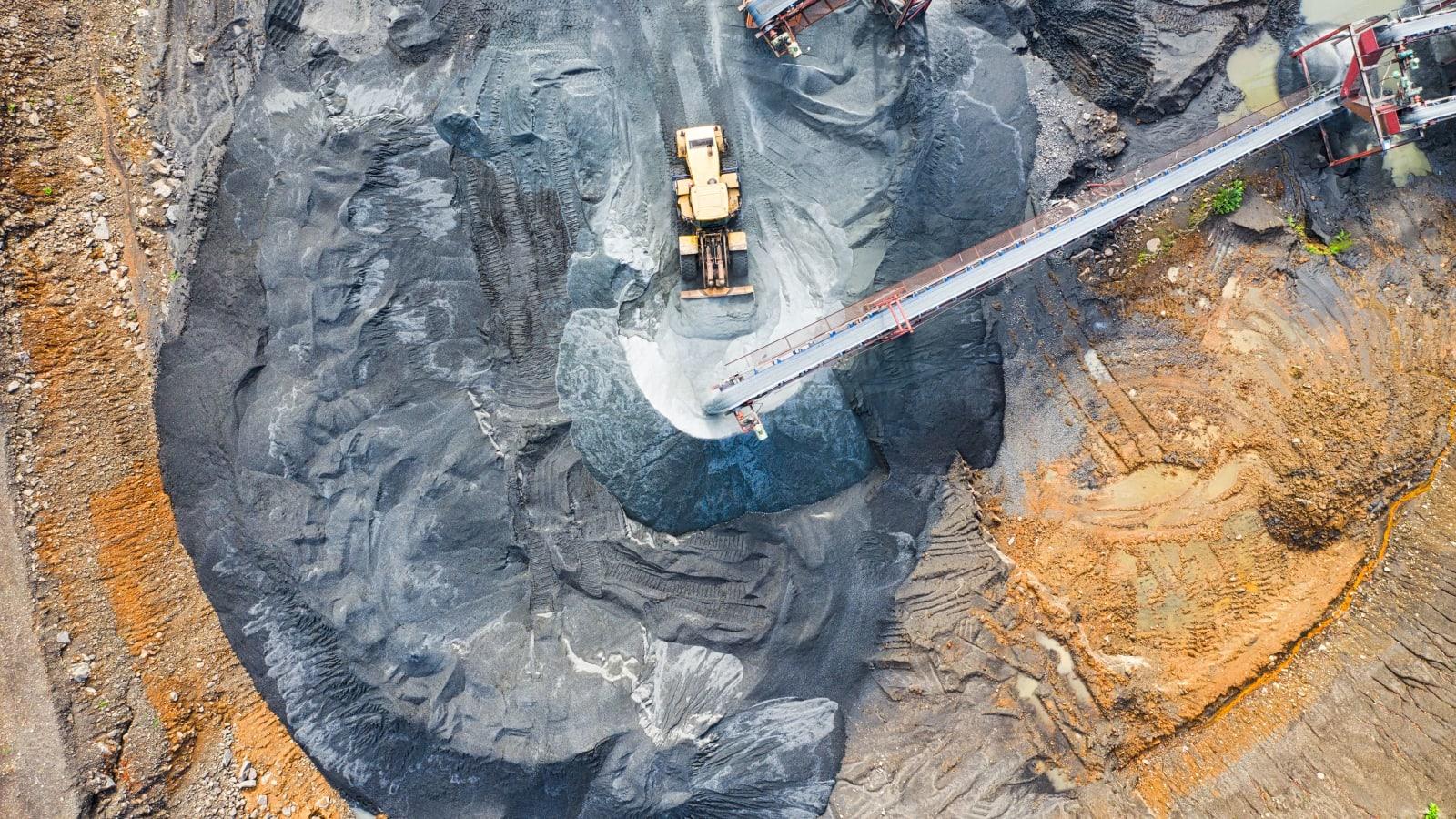
The most instructive number in the release has little to do with the half year itself. Reserves at Batu Hijau, reported under the JORC code, rose 10.2 percent to 777 million tonnes. No new orebody was discovered to produce that increase. The gold price assumption used in the reserve estimate was raised to US$2,500 per ounce, which lowers the cut off grade at which material is economic to treat. Rock previously classified as waste became ore, and the stated mine life extended toward 2031 and 2032.
A reserve is a price assumption applied to a rock. Change the assumption and the tonnage changes, with no new drilling and no new geology.
This is standard practice and entirely proper. It is also the clearest available demonstration of a principle that matters well beyond the mineral accounts. Stated value depends on the method used to state it. Indonesia measures the revenue side of mining with real precision, through royalty tracking, benchmark pricing and published non-tax revenue by commodity. The environmental side of the same concession is measured with less consistency, even though a methodology exists in Permen LH No. 7 Tahun 2014 for pricing ecological damage, environmental economic loss and recovery cost. A reserve restatement shows how quickly a number moves when an assumption is updated. The same sensitivity applies to ecosystem values, which is an argument for setting the method carefully and applying it consistently rather than case by case.
Grade, sequence and the limits of a single strong half
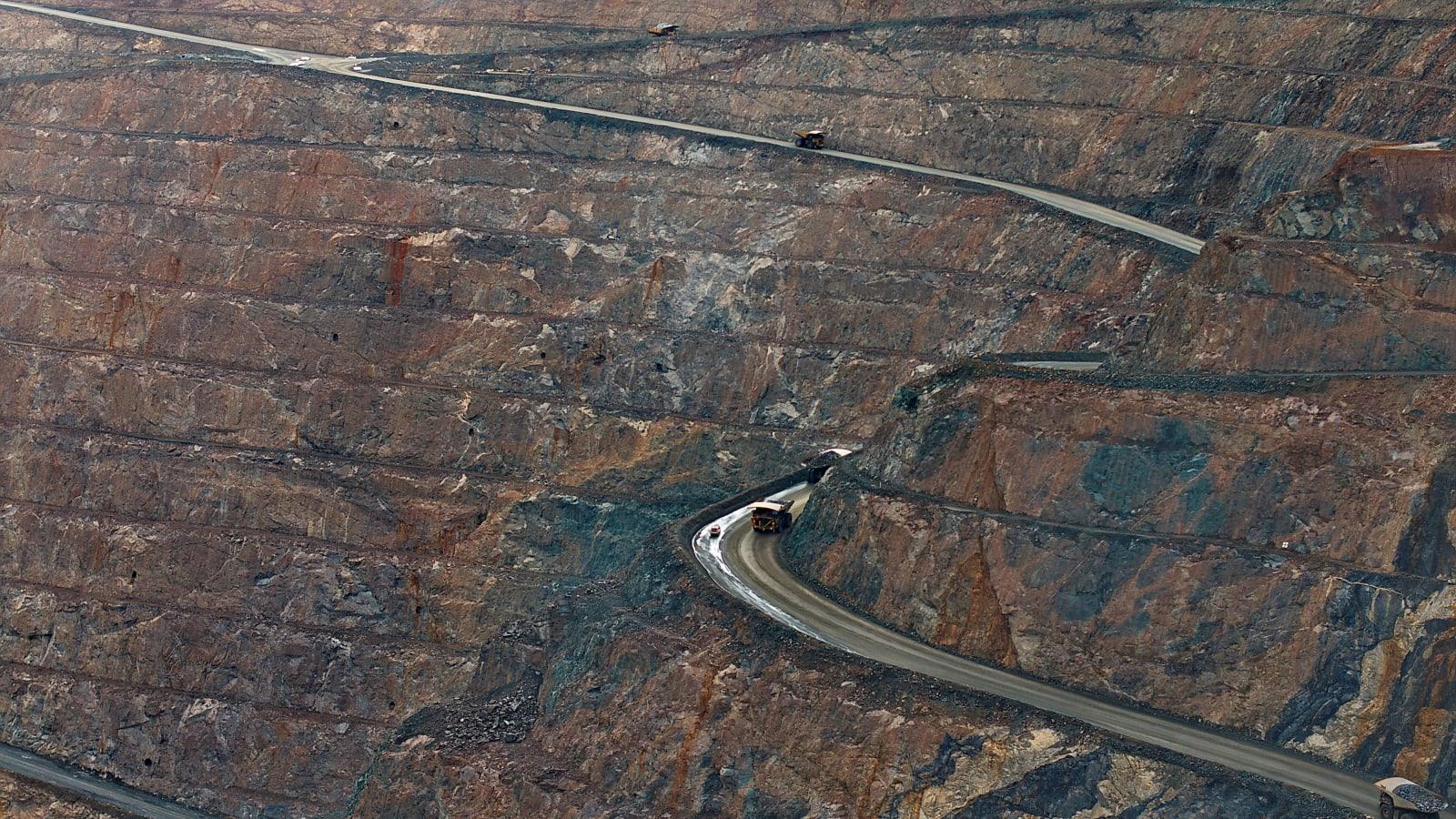
The operating figures explain the financial ones. Mining entered the higher grade Phase 8 at Batu Hijau, and ore production rose to 66 million tonnes in the half against 6 million tonnes a year earlier, with the stripping ratio falling to around 0.9 times. Gold grade averaged 0.65 grams per tonne for the half, above the 0.54 grams per tonne recorded in the first quarter. Gold in concentrate reached 346,354 ounces, up 481 percent. Copper reached 211 million pounds, up 136 percent. Concentrate production rose 81 percent to 347,307 dry metric tonnes. Full year gold guidance was raised 34 percent to 775,000 ounces on the strength of those grades.
The concentrator processed around 20 million tonnes, well below the tonnage mined, so ore inventory accumulated on surface. The concentrator expansion entered commissioning in August 2026, which is what allows that inventory to be drawn down. Longer series place the half in context. Net sales were US$2,033 million in 2023, US$2,664 million in 2024 and US$1,847 million in 2025, with net profit of US$259 million, US$642 million and US$258 million across those years. A single half that exceeds the whole of the preceding year reflects mine sequence and the completion of a transition. It is a strong result, and it should be read as the start of a new phase rather than as a permanent run rate.
Market positioning follows the operating story. As at 21 September 2026, 15 of the 16 analysts covering the stock held a buy recommendation and one held a hold rating, with an average target price of Rp6,829 against a traded price of Rp4,690.
What a longer mine life asks of closure planning
Extending Batu Hijau toward 2031 and 2032 moves the closure horizon, and the Elang project moves it further. The JORC report for Elang was completed in the third quarter of 2026, a final investment decision is targeted for 2027, first ore is expected in 2031 or 2032, and ore is planned to travel by overland conveyor to the expanded Batu Hijau processing and smelting facilities. In effect, one integrated complex in West Sumbawa is being planned to operate well past the original Batu Hijau end date.
That is good news for regional employment and for the utilisation of infrastructure already built. It also changes the arithmetic of closure. Reclamation and post-mining guarantees are placed against plans and cost standards that assume a schedule. When the schedule extends, the timing of drawdown changes, the land area under progressive reclamation changes, and the treatment of future recovery costs changes with it. Elsewhere in the sector, operators have begun drafting post-mining plans as much as a decade before closure, which is the right direction of travel. The practical requirement is that the environmental baseline is refreshed on the same cycle as the reserve statement, so that both sides of the ledger are updated together.
Sirkularium's view
Indonesia can now describe the financial value of a major mine to the nearest million dollars, by product, by quarter and by refining stage. That is an administrative achievement worth recognising, and this set of results shows the downstream policy producing the effect it was designed to produce. The task ahead is to bring the environmental account to a comparable standard, so that the condition of land, water and biodiversity beneath a concession is stated with the same regularity as reserves and revenue.
For mining operators, the practical step is to commission rigorous economic valuation as an ongoing practice rather than as a response to a dispute. That means GIS and remote sensing baselines updated on a fixed cycle, ground verification of land cover and water quality, AMDAL commitments tracked against measured outcomes, and ecosystem services valued using the methodology set out in Permen LH No. 7 Tahun 2014. An operator able to produce that record on request is in a far stronger position with the Ministry of Environment, with regional governments and with lenders than one assembling it under pressure.
For government and public institutions, three things are worth watching. The first is the Elang final investment decision expected in 2027, which will fix the long term production and closure profile for West Sumbawa. The second is delivery against the raised cathode and gold bar guidance, which is the real test of whether refined output has become a stable base rather than a ramp up. The third is whether reserve restatements of this kind are accompanied by corresponding updates to reclamation plans and guarantee placements. Value and obligation move together in mining. Measuring one closely and the other occasionally leaves a gap that is avoidable, and closing it is a matter of method rather than of new law.
First half 2026 net sales by product
Values in US$ million
Sources
- Bloomberg Technoz, AMMN posts net profit of Rp8.89 trillion in the first half of 2026, 21 September 2026
- Katadata, Amman Mineral prepares the Elang mine as first half profit reaches Rp8.89 trillion, 21 September 2026
- Bisnis Indonesia, Amman raises its 2026 gold production target to 775,000 ounces, 21 September 2026
- IDX Channel, Amman Mineral books first half 2026 net profit with an EBITDA margin of 55 percent, 21 September 2026
- Kabar Bursa, sales and profit climb in the first half of 2026, with balance sheet and analyst detail, 21 September 2026
- Stockbit Snips, AMMN first half 2026 review with reserve, grade and smelter guidance detail, 21 September 2026
- Suara, first half 2026 sales and profit reported at US$428.83 million, 21 September 2026
- AMMAN press release, the copper smelter is formally complete, 24 July 2026
- Indonesian Mining Association, AMMN full year 2025 results with the smelter in full operation, 26 March 2026
- Kontan, AMMN records a 148 percent rise in net profit across 2024, 20 March 2025