
The Army and four local governments sign up to turn landfill stockpiles into fuel
By Sirkularium Editorial Team, 9 min read
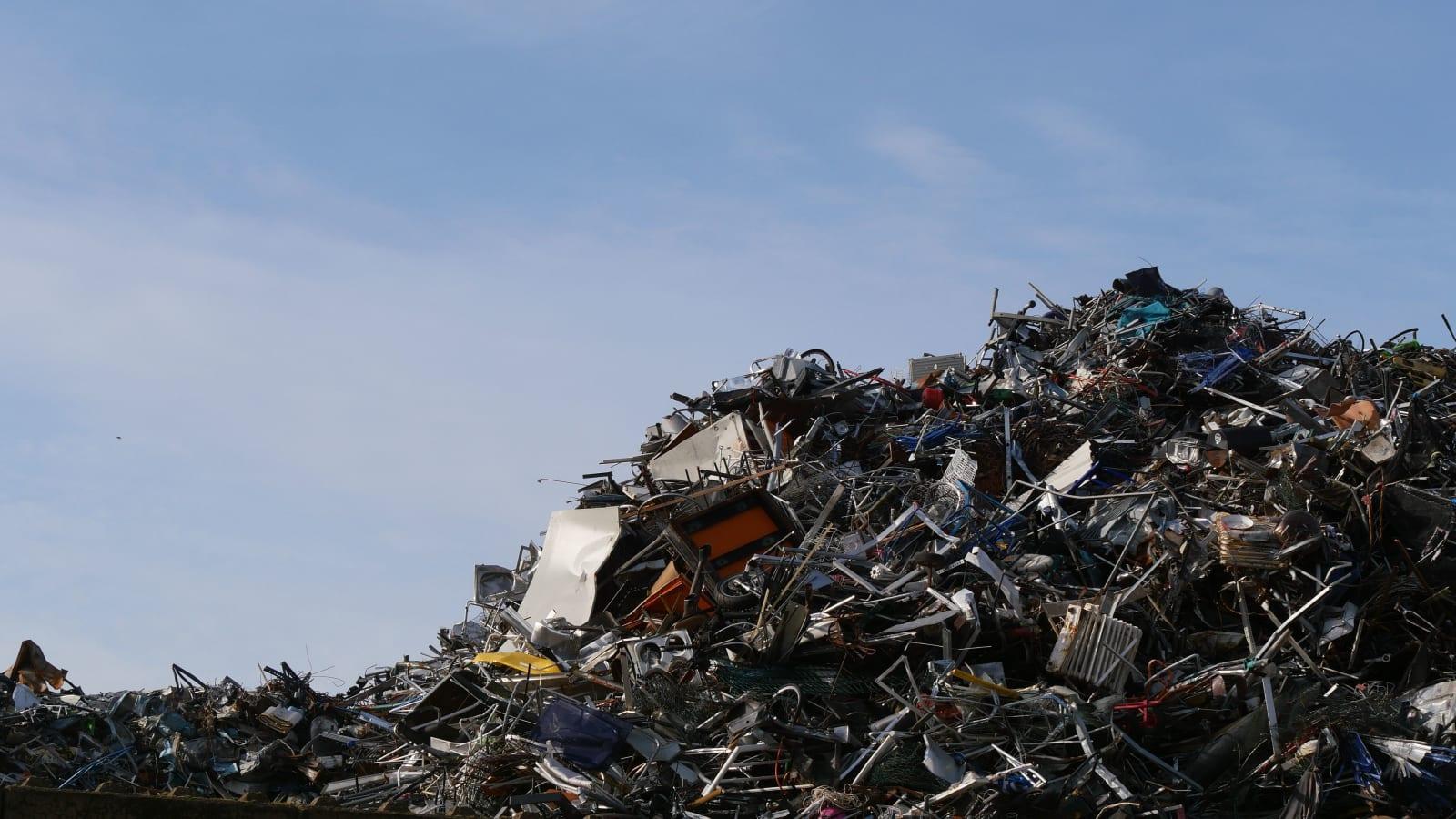
On 7 August 2026 the Indonesian Army signed a joint commitment with the city governments of Bekasi, Bogor and Semarang and the Bogor regency government to build pre treatment and pyrolysis facilities at landfill sites. The plan gives the accumulated waste already sitting in landfills, rather than only the daily inflow, a defined route into an energy product.
Indonesia's waste programme gained a new delivery partner on 7 August 2026. At the Jati Kusumo Hall inside Army Headquarters in Jakarta, the Indonesian Army signed a joint commitment on technology based waste management with four local governments: the Bekasi city government, the Bogor city government, the Bogor regency government and the Semarang city government. Chief of Staff of the Army General Maruli Simanjuntak signed for the armed forces. Coordinating Minister for Food Zulkifli Hasan witnessed the signing directly.
The substance of the commitment is narrow and practical. The parties will develop pre treatment facilities and pyrolysis plants at final processing sites, converting waste into fuel oil. Bogor Regent Rudy Susmanto and Bogor Mayor Dedie A. Rachim signed for the two Bogor jurisdictions, with TPA Galuga, the regional landfill serving both, named as the site in scope. Deputy Mayor of Bekasi Abdul Harris Bobihoe signed for Bekasi, where the target is the stockpile at Bantargebang.
What separates this from the waste to electricity track
Indonesia already has a large waste to electricity programme running through the PSEL scheme, and the Bogor agreement covers both routes: a waste to energy component feeding the Karacak substation, and a pyrolysis component producing fuel oil. Reading the two together is what makes the announcement significant.
Waste to electricity plants are built around a daily inflow. They need a contracted tonnage arriving every day to run at design capacity, which means they address the waste a city generates from tomorrow onward. They do not, on their own, reduce what is already in the ground. Pyrolysis applied to a landfill stockpile addresses the other half of the problem, the accumulated material that has been arriving for decades and now defines the physical footprint of sites such as Bantargebang.
Zulkifli Hasan framed the distinction directly at the signing, noting that the earlier work converted waste into electricity and that this agreement adds a route converting waste into fuel oil, so that the accumulated pile at Bantargebang, which he described as standing as high as a 16 storey building, becomes feedstock rather than permanent inventory.
"Sampah tidak lagi dianggap sebagai beban. Sebaliknya, sampah kini menjadi sumber energi," Coordinating Minister Zulkifli Hasan said at the signing, marking the shift from treating waste as a cost line to treating it as an energy input.
The numbers behind the commitment
The figures presented around the signing set the scale of the task. National data cited at the event puts 22.17 million tonnes of waste as not yet properly managed on 2024 records, with 54 percent still held at sites operating on an open dumping basis. Projected national waste generation reaches 146,780 tonnes per day by 2029, the year Indonesia has set for its clean nation target.
Against that, the national handling strategy presented at the event allocates treatment across five routes. Organic processing at source accounts for 12.4 percent. TPS 3R facilities and waste banks account for 19.8 percent. TPST facilities producing refuse derived fuel account for 25.3 percent. Pyrolysis accounts for 20.0 percent. PSEL electricity projects account for 22.5 percent.
That allocation is worth reading closely, because it answers a question local governments have been asking since compulsory source separation began taking effect. The strategy does not rest on a single technology. Source level organic treatment and community waste banks together carry 32.2 percent, roughly a third, which keeps household separation central rather than optional. Thermal and fuel routes, meaning RDF, pyrolysis and PSEL combined, carry 67.8 percent. Pyrolysis at 20.0 percent is the newest entrant in that group and the only one of the five explicitly suited to working through legacy stockpiles rather than daily inflow.
Where the facilities are expected to land
Pyrolysis deployment is targeted at a minimum of five locations, covering Jakarta, Bogor, Bekasi, Semarang and further regions. That target set aligns with the candidate list General Maruli outlined earlier in the programme's development, on 4 June 2026, which named TPA Bantargebang and TPA Sumur Batu in Bekasi, TPA Galuga in Bogor, TPA Sarimukti in West Bandung Regency, TPA Jatibarang in Semarang and TPA Suwung in Denpasar.
Each of those sites carries a different constraint. Bantargebang has the accumulated volume and the height. Sarimukti serves the Bandung metropolitan area, which has been working through a declared waste emergency. Galuga serves two jurisdictions at once, which is precisely why both the Bogor regency and city governments signed. Jatibarang anchors Semarang's system. Selecting sites where the pressure is already highest gives the first installations a clear performance benchmark rather than a demonstration setting.
Regent Rudy Susmanto summarised the Bogor position at the signing with a phrase that captures how local governments are positioning these projects, describing the effort as coming from West Bogor for Indonesia. The framing matters. These are municipal assets being offered into a national programme, not national assets being placed into municipalities.
What the armed forces add to a municipal balance sheet
The Army's involvement changes the delivery equation in ways that go beyond the ceremonial. General Maruli has stated the institution is ready to support the government programme through the strength and resources it holds, and that the President has asked all levels to take an active role in finding solutions.
For a district or city government, three constraints usually determine whether a waste processing facility gets built and then keeps running: capital, technical installation capacity, and sustained operations and maintenance. Municipal budgets vary widely, and the smaller the jurisdiction the harder each of the three becomes. An institution with nationwide logistics, engineering units and permanent personnel can absorb parts of the second and third constraints in a way that a one time equipment procurement cannot.
Deputy Mayor Harris Bobihoe added the qualification that keeps the plan honest, observing that the renewable energy technology collaboration is a strong step but must be accompanied by a change in household habits, particularly separation at source. That point connects the agreement back to the 12.4 percent and 19.8 percent shares in the national allocation. Pyrolysis and RDF both perform better on a feedstock that has already had its organic and recyclable fractions removed, so the community level work and the industrial level work reinforce each other rather than competing for the same tonnes.
Sirkularium's view for government and public institutions
For provincial and district governments planning their own post open dumping arrangements, the most useful feature of this agreement is that it puts legacy stockpiles into a named treatment route with a named implementing partner. Most regional waste roadmaps have been strong on future inflow and thin on accumulated volume, because landfill mining and stockpile processing carry costs that rarely survive a regional budget hearing on their own. A national programme that assigns 20.0 percent of the handling strategy to pyrolysis gives regional planners a policy basis for putting stockpile treatment into their own documents.
The second point worth carrying forward is the pairing structure. Bogor signed for both a waste to electricity component and a pyrolysis component at the same landfill complex, with a defined electricity offtake point at the Karacak substation. Treating daily inflow and accumulated stock as two products of one site plan, with distinct technologies and distinct offtake arrangements, is a more financeable configuration than pursuing either alone. Local governments preparing feasibility work should look at whether their own landfill sites can support the same dual configuration.
What to watch over the coming months is the division of responsibility between the Army and each local government, specifically whether the armed forces take on construction and commissioning, ongoing operation and maintenance, or both, and how fuel oil offtake is arranged once the first units produce at volume. Those two questions determine whether the joint commitment signed at Jati Kusumo Hall becomes a replicable template for the remaining regencies and cities, or remains a set of four bespoke arrangements. Sirkularium will follow the site level agreements at Galuga, Bantargebang and Jatibarang as the clearest early indicator of which it becomes.
How the national waste handling strategy is allocated
Values in percent
Sources
- ANTARA News, Bupati Bogor and Army Chief of Staff sign waste to fuel agreement
- ANTARA News Megapolitan, Bogor Regency signs cooperation agreement covering TPA Galuga
- GoBekasi, Bekasi City partners with the Army on Bantargebang stockpile processing
- Indik.id, Deputy Mayor Harris Bobihoe on the renewable energy collaboration and national waste figures
- Gemarnews, Army and four local governments agree on technology based waste management
- Bekasi Today, Army and regional governments advance pyrolysis based waste processing
- Kompas, Army Chief of Staff Maruli confirms readiness to join waste to fuel work
- Koran Jakarta, four star general takes direct charge of waste to fuel processing