
Indonesia puts its waste sorting workforce on the national social protection map
By Sirkularium Editorial Team, 9 min read
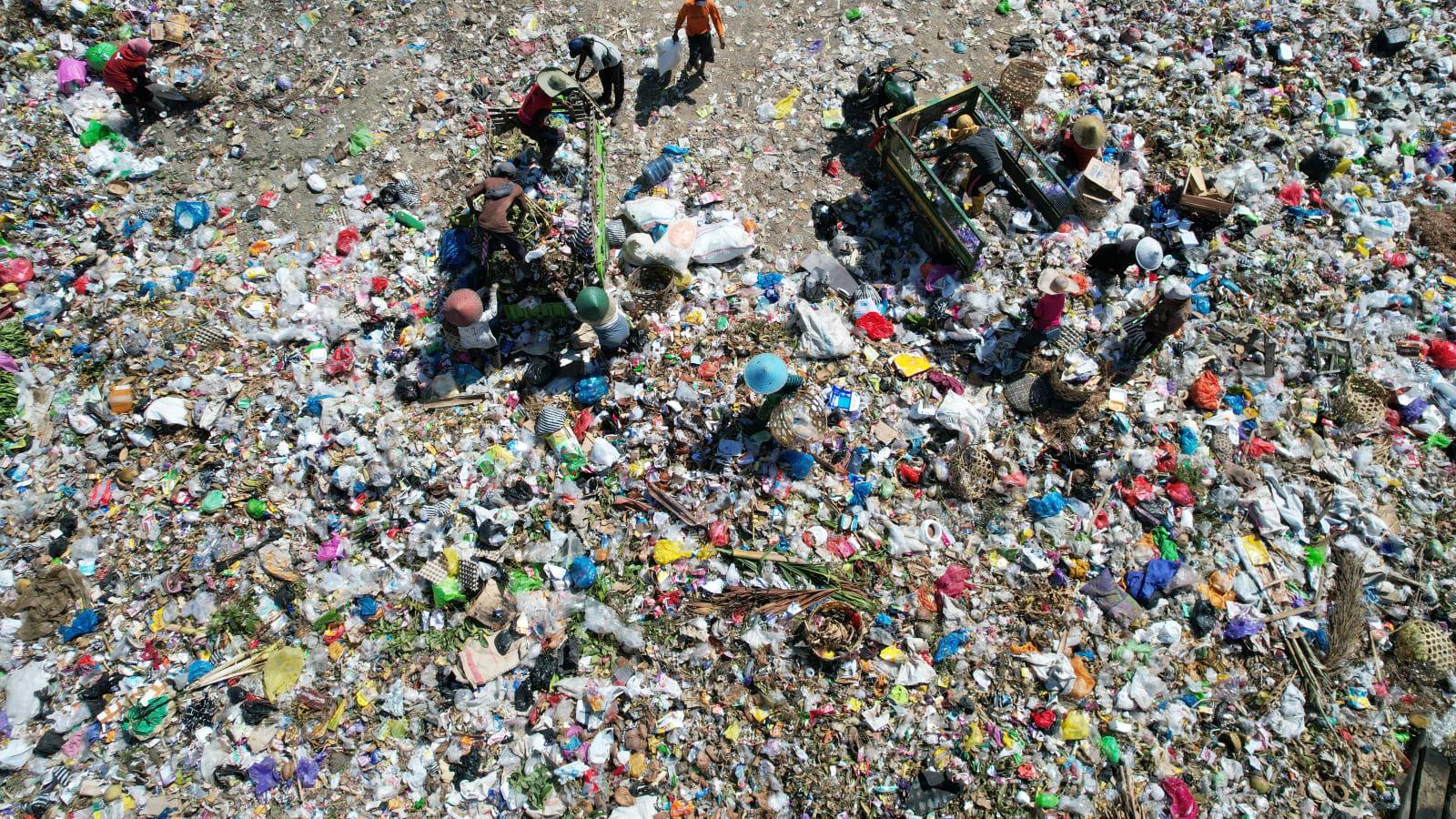
On 10 August 2026 the Ministry of Environment, the Ministry of Manpower and the Jakarta provincial government launched social protection for the informal waste sector at the Rorotan recovered fuel plant in North Jakarta. Work accident and death benefit premiums fall by half to Rp8,400 a month, and the government is moving to reclassify the job itself.
Indonesia's waste sector gained a piece of social infrastructure on 10 August 2026 that has been missing for as long as the sector has existed. At the refuse derived fuel plant in Rorotan, Cilincing, North Jakarta, the Ministry of Environment, the Ministry of Manpower and the Jakarta provincial government jointly declared the national launch of social protection for informal workers in solid waste management. Environment Minister and Head of the Environmental Control Agency Mohammad Jumhur Hidayat, Manpower Minister Yassierli and Jakarta Governor Pramono Anung Wibowo led the declaration, joined by BPJS Ketenagakerjaan President Director Saiful Hidayat and representatives of the United Nations Development Programme.
The choice of venue carried its own argument. Rorotan is not a conference hall. It is an operating recovered fuel facility, and the people the policy addresses were standing in the building where their output ends up.
What the launch actually changes
The core instrument is a price change, and a large one at the household level. Informal workers in the waste sector now pay half the standard premium for the two BPJS Ketenagakerjaan programmes that matter most to them: Jaminan Kecelakaan Kerja, the work accident scheme, and Jaminan Kematian, the death benefit scheme. The combined monthly contribution falls from Rp16,800 to Rp8,400. The discount rests on Government Regulation 50 of 2025 and runs to the end of 2026, after which the government will evaluate whether to extend it.
Rp8,400 a month is a small number in a national budget line. It is not a small number in the calculation a sorting worker makes about whether to enrol. That is the point of the design. The benefit side is where the value sits: the death benefit scheme pays a lump sum, funeral costs and twenty four months of periodic payments totalling Rp42 million, and it funds education scholarships for up to two children of a deceased participant worth as much as Rp174 million in total. For a household whose income depends on one person's ability to work a sorting line safely, that is the difference between a shock absorbed and a family displaced.
Manpower Minister Yassierli framed the discount as one step inside a wider coverage objective that reaches well past this sector.
We want 100 percent of Indonesian workers covered by social security.
The same discount architecture is being applied to other informal occupations, including ride hailing drivers, agricultural workers and workers in the creative economy. Waste is simply where the government chose to open the account, and the occupational risk profile explains why. Sorting workers handle biological and chemical hazards, sharp objects and heavy material every working day, usually without formal contracts, and until now usually without cover.
Jakarta's numbers, and the gap that remains
Jakarta gives the clearest picture of where implementation currently stands. Roughly 4,000 sorting workers at TPST Bantargebang are registered with BPJS Ketenagakerjaan, under a provincial programme that has been running since 2017. In 2026 the provincial government has paid more than Rp806 million in premiums on their behalf.
The honest part of the day was the number that came next. Around 6,000 people work at the Bantargebang site, which means roughly 2,000 remain outside the scheme. Governor Pramono Anung asked the provincial environment agency to identify them and bring them in, rather than presenting the 4,000 as a finished result. Naming the residual gap in public is what makes the target verifiable later.
Beyond Jakarta, the programme is being rolled out simultaneously in ten cities: Bekasi, Depok, Medan, Tangerang, Surabaya, Surakarta, Makassar, Malang, Bandung and Mataram. Depok illustrates the shape of the work ahead. The city has identified 3,672 informal waste sector workers, of whom the first 200 have been enrolled. The identification exercise is running ahead of enrolment, which is the correct order, and it converts an unknown population into a countable one.
Reclassifying the job, not only insuring it
The more structural announcement of the day was about language and legal status. The Ministry of Environment has formally asked the Ministry of Manpower to replace the term "pemulung", conventionally rendered as scavenger, with "pekerja pemilah sampah", or waste sorting worker. Minister Yassierli confirmed the request had been received and that the change would be written into the Klasifikasi Baku Jenis Pekerjaan Indonesia, the national standard occupational classification.
Minister Jumhur Hidayat described the workforce as green collar workers and placed them at the head of the recovery chain rather than at its margins, noting that they operate before material reaches facilities such as the Rorotan plant. He also linked worker dignity to the quality of waste management itself, treating the two as one indicator rather than two separate agendas.
An entry in the occupational classification is not symbolic. It is the hook that other systems hang on. Once a job exists in the KBJI it can carry a competency standard, and the government signalled that a Standar Kompetensi Kerja Nasional Indonesia for waste sorting work is being prepared. Competency standards enable certification, certification enables contracting, and contracting enables a formal employment relationship.
That chain has a destination. The government is preparing producer responsibility rules under which packaging producers fund the management of what they place on the market, with a ministerial regulation on extended producer responsibility in progress. Revenue collected under that framework is intended to flow into waste management and worker protection, and Producer Responsibility Organizations are envisaged as the entities that would eventually contract sorting workers directly. Social insurance today, occupational recognition next, contracted employment funded by producers after that. Each step is usable on its own, which is what makes the sequence credible.
The workforce has somewhere to go, because the system is changing around it
The launch landed in the middle of a genuine shift in how Jakarta handles material. Governor Instruction Number 5 of 2026 took effect on 1 August 2026 and replaced the old operating pattern of collect and dump with sort, collect and process.
Since 1 August, Bantargebang has been accepting only residual waste, in stages.
That single sentence changes the economics of sorting work. If recoverable material must be separated before it reaches the landfill, the people who separate it move from the end of the chain to the middle of it. Jakarta reports its sorting movement reached 23.14 percent in early August 2026, supported by 8,615 waste management support facilities including 2,247 waste banks and 31 TPS 3R units. The Rorotan plant where the declaration was held produces recovered fuel at a reported 100 to 150 tonnes a day.
The province handles about 9,000 tonnes of waste daily and is targeting 100 percent managed waste and zero dumping at Bantargebang by 2028. Three waste to energy plants are planned, at Bantargebang, Tanjung Priok and Sunter, each sized to process 1,500 to 2,000 tonnes a day, with Danantara involved in accelerating delivery.
Sirkularium's read for government and public institutions
Three points deserve attention from institutions planning their own programmes.
First, the enrolment barrier for informal workers is rarely willingness. It is the combination of premium affordability and administrative identification. The Rp8,400 premium addresses the first. Depok's list of 3,672 workers and Jakarta's search for the remaining 2,000 at Bantargebang address the second. Local governments that begin the identification exercise now will be ready when the national scheme scales, and those that wait will be enrolling from a blank page.
Second, the discount has an expiry date at the end of 2026 and will be evaluated. That evaluation will be evidence based, so enrolment data, accident claim data and retention data collected during 2026 will shape what follows. Regions that document their rollout carefully are contributing to the national case for continuation.
Third, the occupational classification change is the item with the longest reach. Insurance protects a worker against a bad day. A recognised occupation, a competency standard and a contracting counterparty change what the job is. Public institutions designing extended producer responsibility schemes should treat the sorting workforce as the intended beneficiary of producer funding from the outset, not as a group to be accommodated afterwards.
What to watch next: the timing of the KBJI amendment and the competency standard, the extended producer responsibility ministerial regulation and how it defines the role of Producer Responsibility Organizations, enrolment figures from the ten rollout cities, and the end of year evaluation of the premium discount. Each is a checkpoint on whether Indonesia's circular economy is being built with its existing workforce rather than around it.
Sources
- ANTARA News, Informal waste sector workers receive a discount on JKK and JKM premiums
- ANTARA News, 4,000 waste pickers at Bantargebang registered with BPJS Ketenagakerjaan
- ANTARA News, Jakarta Governor backs government synergy to protect informal waste sector workers
- ANTARA News, Government prepares to change the occupational title from pemulung to pemilah sampah
- Detik News, Environment Minister proposes replacing pemulung with waste sorting worker
- Detik News, Manpower Minister confirms JKK and JKM premiums of Rp8,400 a month for waste sorting workers
- Koran Jakarta, Manpower Minister Yassierli on the 50 percent JKK and JKM premium discount
- Koran Jakarta, Jakarta changes its waste management pattern and targets zero dumping in 2028
- Kompas Megapolitan, Pramono targets 100 percent of Jakarta's waste processed by 2028