President sets end of 2027 to resolve Indonesia's waste, backed by Rp20 billion incentives for the cleanest cities
By Sirkularium Editorial Team, 9 min read
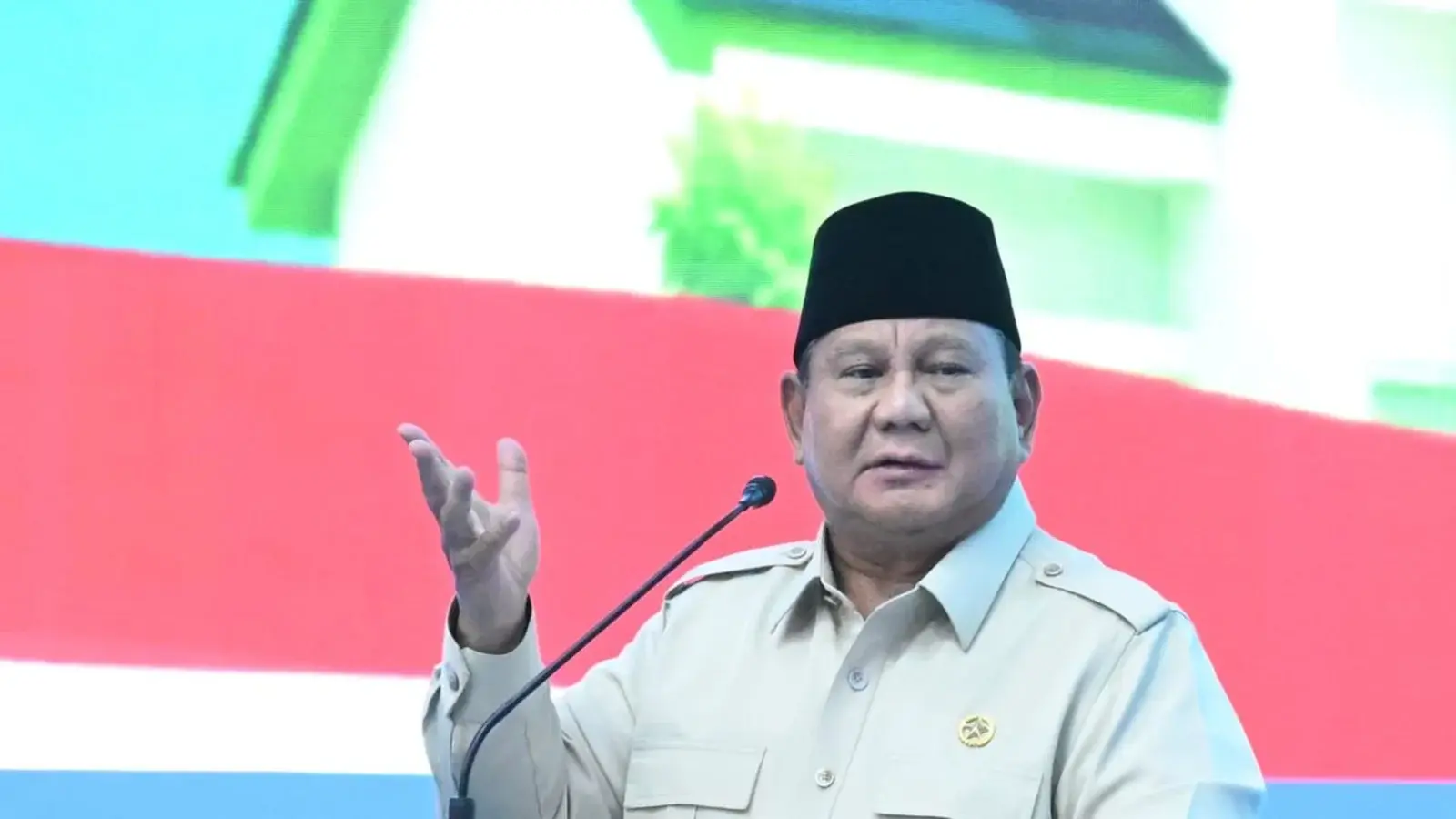
Speaking in Batang on 30 July 2026, President Prabowo Subianto asked for Indonesia's waste problem to be resolved by the end of 2027 and proposed a national cleanest city competition, with Rp20 billion for each of the five best performers and Rp10 billion for the next five, to be spent on trucks, excavators, and other handling capacity.
Indonesia's waste agenda gained a clear political deadline this week. On 30 July 2026, in Batang Regency, Central Java, President Prabowo Subianto asked for the country's waste problem to be substantially resolved by the end of 2027, and paired that request with a concrete instrument: a national cleanest city competition carrying budget incentives of up to Rp20 billion per winning region. For the ministries, provinces, and city administrations already working through the transition away from open dumping, the announcement supplies something that technical roadmaps rarely carry on their own, which is a visible reward for performance and a date that everyone can plan against.
A deadline announced in Batang
The setting was a housing event rather than an environmental one. The President was in Batang for the mass signing of 62,710 subsidised housing mortgages, an occasion held simultaneously at 165 locations across 372 districts and cities in 36 provinces, according to Kompas.com. Earlier the same day he had marked the completed revitalisation of Semarang Tawang Station and travelled onward by the Kereta Nusantara Explorer service, as ANTARA News reported. Waste entered the speech through the theme of liveable neighbourhoods, with the President arguing that new housing only delivers its full value when the surroundings are clean and well kept.
"God willing, within one or two years we will make a drastic change. By the end of 2027 I ask that the waste problem in Indonesia be finished. There will be no more mountains of waste, and we will achieve this."
The Batang Regency government's own account of the visit recorded the framing the President used for the wider ambition, an acronym he called ASRI, standing for aman, sehat, resik, and indah, meaning safe, healthy, clean, and beautiful. Earlier in the day, speaking in Semarang, he had put the same point in terms of waterways, saying that within a year the waste problem across Indonesia had to be settled and that every river and canal should be clean. ANTARA News also reported his call for reforestation on a large scale, with the Agriculture and Forestry ministries asked to prepare seedlings for planting that he described in the hundreds of millions of trees.
How the cleanest city incentive would work
The most operationally interesting part of the announcement is the incentive design. As reported by ANTARA News and Kompas.com, the President proposed ranking cities by cleanliness and attaching budget rewards to the leaders. The five cleanest cities would each receive Rp20 billion. The next five would each receive Rp10 billion, with further tiers indicated but not yet specified.
In the President's own words, quoted by ANTARA News: "Kita bikin lomba, kota tebersih, kota tebersih 1, 2, 3, 4, 5 ... kita kasih nanti insentif. Kota terbersih kita kasih kalau bisa Rp20 miliar, lima kota terbersih Rp20 miliar. Lima kota di bawahnya Rp10 miliar, dan sebagainya."
No organising body, judging methodology, or launch date has been published yet. That detail matters, and it is the natural next step for the ministries involved. Coverage by Tangsel Xpress indicated that coordination is expected to run through the Coordinating Ministry for Economic Affairs, the Ministry of State Secretariat, and the Ministry of Finance, with Coordinating Minister for Economic Affairs Airlangga Hartarto, State Secretary Prasetyo Hadi, and Finance Minister Purbaya Yudhi Sadewa all present at the Batang event alongside Agriculture Minister Andi Amran Sulaiman.
Cash rather than trophies
The President was explicit about why the reward takes the form of budget rather than recognition. Kompas.com quoted him saying that money is more useful than a trophy because it can be spent on trucks, excavators, and similar equipment. That single sentence turns a cleanliness campaign into a capital equipment programme.
"It is better to give that than to give a trophy. The money is used for something good. It can buy trucks, excavators, and so on."
Supply was addressed in the same breath. Coverage of the visit noted that the TNI Commander was asked to check the availability of domestically produced heavy equipment, and Tangsel Xpress reported that PT Pindad has been pointed to as a supplier of excavators. Read together, the incentive and the sourcing instruction sketch a loop in which performance funding flows to regions, regions convert it into collection and handling capacity, and the procurement lands with domestic manufacturers. For a sector where the binding constraint in many districts is simply the number of working trucks and loaders, that is a practical mechanism.
The baseline the target has to move
The scale of the task is documented. The Ministry of Environment set out the national position in April 2026: Indonesia has 485 landfill sites, roughly 30 percent of which had stopped open dumping by the end of 2025, leaving around 369 that still require conversion to controlled or sanitary systems. The national waste handling target for 2026 stands at 63.4 percent. The ministry's central message in that briefing was that waste cannot be solved through a collect, transport, and dispose pattern, and has to be managed at the source.
That framing is consistent with what has been happening on the ground through July. Jakarta moves to a sort, transport, and process scheme at TPST Bantargebang from 1 August. Makassar begins accepting only residual waste at TPA Tamangapa on the same date. Construction started in Bandung Regency on the Legok Nangka waste to energy facility, designed for around 2,000 tonnes per day from six regions. The presidential deadline now sits on top of that activity as a common reference point rather than as a separate initiative.
The ministry also pointed to Bali as evidence that source separation can move quickly when it is pushed consistently, noting that more than 60 percent of residents in Denpasar and Badung Regency were sorting their waste. That is the kind of behavioural shift a cleanest city competition is well suited to reward, because sorting rates and street level cleanliness are visible, measurable, and locally owned.
Daily inspection as a leadership standard
Alongside the money, the President set an expectation of routine attention from regional leaders. Governors, regents, and mayors were asked to inspect rivers and canals daily and to engage directly with residents on the condition of their streets and frontages. Kompas.com quoted him saying that checking rivers and canals every day is what makes a great leader.
He also placed cleanliness in national terms, saying that cleanliness is a matter of national honour and that Indonesia should not be known as an untidy nation. Coverage noted that the movement is intended to draw in the TNI, the Polri, prosecutors, neighbourhood leaders, cooperatives, religious institutions, and the civil service, which signals an approach built on broad participation rather than on the environment ministry acting alone.
Sirkularium's view: turning an incentive into an operating system
For government and public institutions, the value of this announcement lies less in the headline date than in what the incentive makes possible. Three points deserve attention.
First, the measurement framework will determine the outcome. A competition rewards what it counts. If the ranking rests on visible street cleanliness alone, regions will optimise for sweeping. If it incorporates source separation rates, residual tonnage sent to landfill, the operating status of TPS3R and TPST facilities, and data reported into the national waste information system, then the Rp20 billion becomes a payment for system performance. Sirkularium's view is that the criteria should be published early, held stable for a full cycle, and drawn from data regions already report, so that no district needs to build a parallel reporting effort to compete.
Second, the equipment loop is the strongest feature of the design. Converting reward money into trucks and excavators, sourced where possible from domestic manufacturers such as PT Pindad, addresses a real bottleneck and keeps the fiscal benefit inside the national economy. Regions preparing to compete would do well to have a costed equipment plan ready now, so that an award can be committed quickly rather than absorbed into general spending.
Third, the deadline works best as a coordinating device. The end of 2027 sits between the 2026 handling target of 63.4 percent and the longer national roadmap, and it gives provinces a shared horizon for the landfill conversions, source separation programmes, and processing facilities already in motion. Cities that have started, including Jakarta, Makassar, Denpasar, and Bandung Raya, enter the period with an advantage they can build on.
What to watch next: the publication of the competition rules and scoring method, the ministry or coordinating body assigned to administer it, the budget line and disbursement mechanism for the incentives, and the domestic heavy equipment supply commitments that would allow winning regions to convert funding into operating capacity within the same fiscal year.
Sources
- ANTARA News, Prabowo siapkan lomba kota tebersih, pemenang raih Rp20 miliar
- ANTARA News, Presiden Prabowo targetkan persoalan sampah selesai akhir 2027
- ANTARA News, Prabowo targetkan persoalan sampah di Indonesia tuntas dalam setahun
- Kompas.com, Prabowo Tantang Daerah Berlomba Jadi Terbersih, Hadiahnya Rp 20 Miliar
- Kompas.com, Prabowo Targetkan Indonesia Bebas Sampah Akhir 2027
- Pemerintah Kabupaten Batang, Kunjungan Ke Batang, Prabowo Gagas Lomba Kota Terbersih Berhadiah Rp20 Miliar
- Tangsel Xpress, Prabowo Gelar Lomba Kota Terbersih Berhadiah Rp20 Miliar, Target Indonesia Bebas Sampah 2027
- Kementerian Lingkungan Hidup, Target Nasional 2026: Pemerintah Tegaskan Penghentian Open Dumping dan Percepatan Pemilahan Sampah