
Indonesia's marine debris programme puts the solution on land, where 80 percent of the problem begins
By Sirkularium Editorial Team, 9 min read
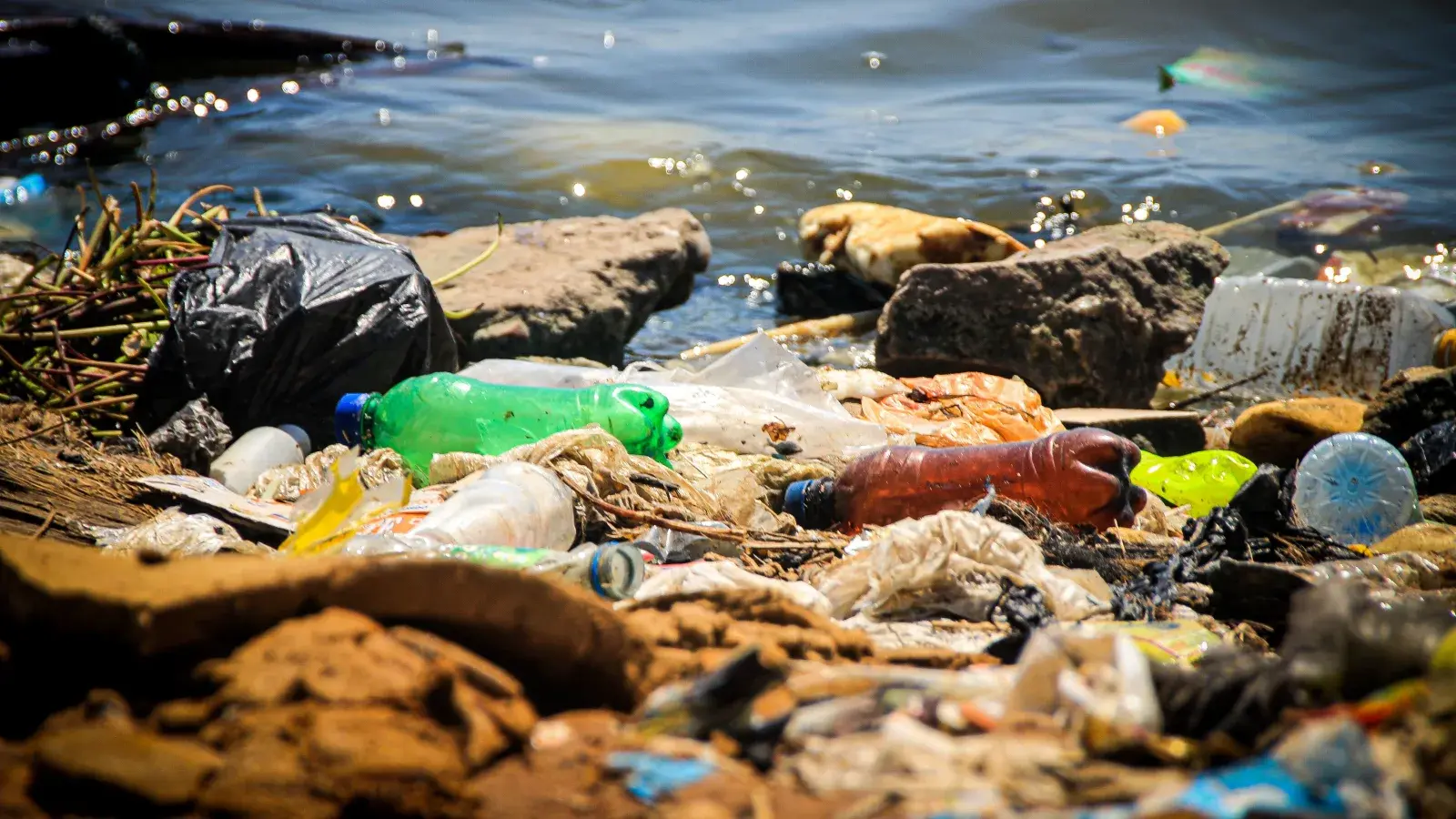
The Laut Sehat Bebas Sampah programme targets a phased reduction of waste entering Indonesian waters, from 10 percent in 2026 to 50 percent by 2029. With about 16.02 million tonnes reaching the sea each year and more than 80 percent of it originating on land, the compulsory source separation now taking effect in cities becomes the primary marine protection instrument.
Indonesia's marine debris strategy has settled on a conclusion that reshapes where responsibility sits. The sea is not where the problem is created. It is where the problem arrives. More than 80 percent of marine debris in Indonesian waters originates from land based activity, carried down rivers, drainage channels, and coastal watercourses, according to the UNEP assessment that both the Ministry of Marine Affairs and Fisheries and the Ministry of Environment now use as their planning baseline.
That framing has a direct consequence for municipal waste policy. The compulsory household separation requirements that took effect in cities on 1 August 2026 are, in this reading, marine protection measures. A tonne of plastic retained in a neighbourhood collection system is a tonne that never reaches an estuary.
The scale of the leak
The figures are large enough to require careful handling. National waste generation was recorded at 50.06 million tonnes for 2025, with roughly 40 percent not adequately managed. Approximately 16.02 million tonnes of waste enters Indonesian waters each year.
The consequences are measurable in specific sectors rather than in abstractions. Fishers operating in affected areas have reported catch reductions of around 30 percent, with 30 to 40 percent of fishing gear damaged by debris. In Bali during peak visitor season, coastal collection has exceeded 60 tonnes a day at affected beaches. One documented case involved a sperm whale found dead with 5.9 kilogrammes of plastic in its digestive tract.
For coastal economies these are not environmental externalities. They are direct operating losses in fisheries, tourism, and shipping, which is what has moved marine debris from an environmental agenda into an economic one.
A phased target rather than a single deadline
The Ministry of Marine Affairs and Fisheries has structured its Laut Sehat Bebas Sampah programme, referred to as Sebasah, around a graduated trajectory rather than a single end date. A. Koswara, Director General of Marine Management at the ministry, has set out the sequence directly.
Our target is a gradual reduction: 10 percent by 2026, 20 percent in 2027, 30 percent in 2028, and finally 50 percent in 2029.
Ahmad Aris, Director of Coastal and Small Islands Affairs at the ministry, has described the operational ambition as bringing rivers, fishing ports, and coastal activities progressively toward zero leakage.
The graduated structure is a deliberate design choice. A single distant target permits deferral. A 10 percent requirement for 2026 forces measurement to begin now, and measurement is where marine debris policy has historically been weakest. The programme accordingly includes a Neraca Sampah Laut, a marine waste balance sheet intended to establish what is entering the sea and from where, alongside an incentive and disincentive mechanism and the Kerthigara national award for waste free coastal areas.
The programme organises intervention around four entry points: river mouths, coastal areas, small islands, and ports and shipping activity. That structure matters because it assigns responsibility geographically, which allows district and city administrations to know which stretch of the chain is theirs.
Land based action is the operative lever
The Ministry of Environment has been explicit that downstream cleanup alone cannot deliver the trajectory. Sayid Muhadhar, Director of Pollution Control and Coastal and Marine Damage Prevention, set out the position during the Sinergi Biru national forum.
The marine debris problem cannot be solved only through cleanup activities downstream. What matters most is preventing leakage at source, strengthening community behaviour change, and ensuring waste management systems work effectively at regional level.
That statement aligns the marine programme with the municipal reforms already under way. Agus Rusly, Director of Waste Reduction and Circular Economy Development at the ministry, has consistently argued that managing waste at source is the most effective route to preventing marine leakage, which is the same principle underpinning Presidential Regulation No. 12 of 2025 and its 63.4 percent national waste management target for 2026.
Rasio Ridho Sani, Deputy for Pollution Control and Environmental Damage, has framed the delivery model around local replication rather than national uniformity, noting that grassroots actions can become models adapted to local conditions. Gita Sabharwal, United Nations Resident Coordinator in Indonesia, has made the complementary point that addressing plastic pollution starts with communities, behaviour change, better systems, and strong collaboration. Village level leadership is part of the model, with Indra Mahardika, head of Derawan Island village in Berau, among the local officials cited for community based practice.
The regional dimension is also recognised. Hyunjeong Jin, representing the Coordinating Body on the Seas of East Asia, has noted that locally generated waste crosses national boundaries through rivers and ocean currents, which makes marine debris a transboundary matter requiring cooperation. Henita Rahmayanti of State University of Jakarta and Muhammad Reza Cordova of the National Research and Innovation Agency have both argued for circular economy theory and material flow analysis as the analytical basis for policy design rather than campaign activity alone.
Where municipal systems connect to the marine target
Three connections between city waste systems and the marine trajectory deserve attention from regional administrations.
The first is riverside and drainage collection. Waste that is collected reliably in riverside settlements does not need to be intercepted downstream at far higher cost. Service coverage in these areas is usually the cheapest marine debris intervention available to a city.
The second is the residual fraction. As cities separate organic and recyclable material, what remains is light, often plastic film, and highly mobile in wind and water. Handling of this fraction between collection and final processing is where visible leakage tends to occur, and it needs specific attention in operating procedures rather than being treated as a general housekeeping matter.
The third is measurement compatibility. If municipal reporting on collection coverage and processed tonnage is structured so that it can feed the marine waste balance sheet, the national trajectory becomes verifiable. If the two systems measure different things, the 10 percent target for 2026 will be difficult to evidence.
Sirkularium's view
The most useful feature of the Sebasah design is that it makes marine protection a function of ordinary municipal competence. Collection coverage, separation compliance, residual handling, and processing capacity are the same variables that determine whether a city meets its national waste management target. Framing them as marine outcomes as well strengthens the case for investment without requiring a separate programme.
For government and public institutions, three implications follow.
On policy, coastal and riverside districts should treat service coverage in leakage prone areas as a priority rather than as a coverage statistic. The marine benefit of a collection round in a riverside settlement is considerably higher than the same round elsewhere, and budgeting should reflect that difference.
On financing, the incentive and disincentive mechanism within the programme, together with the Kerthigara award, creates a route for recognising regional performance. Administrations that establish credible baselines early will be better positioned when those instruments are applied, because performance can only be rewarded where it can be demonstrated.
On implementation, the priority is a shared measurement frame. District environmental agencies, marine affairs offices, and river basin authorities each hold part of the picture. Consolidating collection coverage, residual composition, and river interception data into a single regional baseline during 2026 would give the national balance sheet something reliable to build on.
What to watch next is the first reporting cycle against the 10 percent target for 2026, and whether cities that made household separation compulsory on 1 August can demonstrate a measurable fall in plastic reaching their local waterways. That link, from a household bin to a river mouth, is the one that determines whether the 2029 target is reached. Sirkularium will continue to track the indicators and to support regional administrations in connecting municipal waste performance to marine outcomes.
Targeted reduction in waste entering Indonesian waters
Values in percent reduction
Sources
- Kementerian Kelautan dan Perikanan, Laut Sebasah, upaya nyata menyelamatkan laut Indonesia
- ANTARA News English, Indonesia targets 50 percent cut in ocean waste by 2029
- Kementerian Lingkungan Hidup, Laut bersih dimulai dari daratan, KLH/BPLH dorong aksi lokal dan kolaborasi regional
- Kementerian Lingkungan Hidup, Sinergi Biru perkuat kolaborasi penanganan sampah laut dari hulu hingga hilir
- Kementerian Lingkungan Hidup, Target nasional 2026, penghentian open dumping dan percepatan pemilahan sampah
- Databoks Katadata, How much Indonesian waste ends up in the ocean