Makassar weighs turning TPA Tamangapa's methane into carbon credits and bio-CNG
By Sirkularium Editorial Team, 8 min read
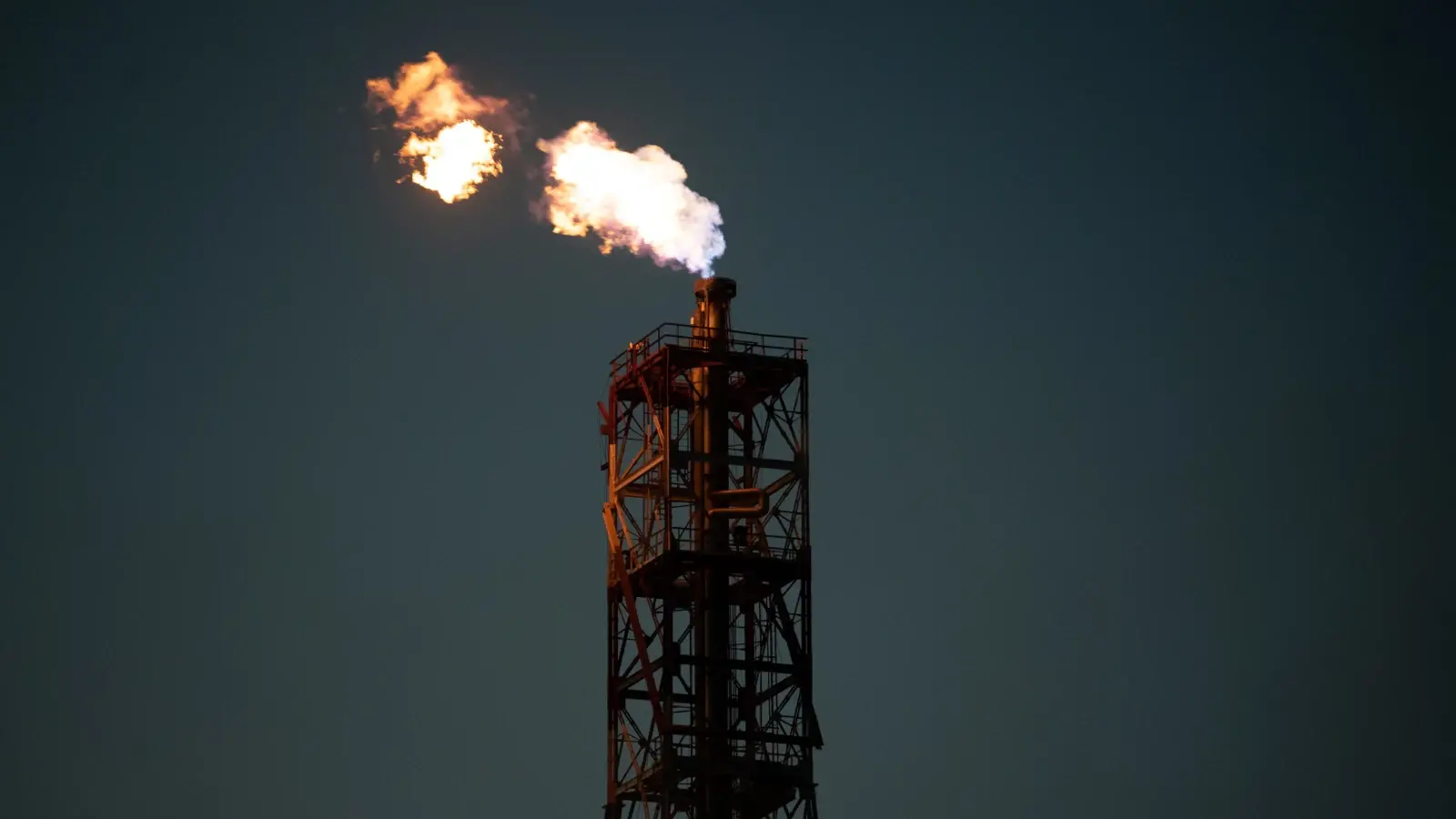
Renewable energy firm Oikos Earth proposed on 1 October that Makassar capture methane from its decades-old Tamangapa landfill and convert it into carbon credits and compressed biomethane for industry. The offer builds on wells already installed at the site and on the city's August shift to residual-only landfilling.
Makassar has received a proposal that would treat its oldest piece of waste infrastructure as an environmental asset. On Thursday 1 October 2026, Muh. Syiraz, CEO of renewable energy management company Oikos Earth, met Mayor Munafri Arifuddin at the mayor's official residence and offered to manage methane from TPA Tamangapa in Antang through a carbon trading scheme. The captured gas could also be upgraded and compressed into bio-CNG for sale to industry.
The meeting was attended by Melinda Aksa, chair of the Makassar Environmental Council, Helmy Budiman, head of the city Environment Agency (DLH), and Andi Hudli Huduri, who chairs the city's expert team. The city will now assess the technical, economic and governance requirements before deciding how to proceed.
What Oikos Earth proposed
The offer has two linked parts. The first is an emission reduction project. TPA Tamangapa has received waste since the 1990s, and the organic fraction buried over three decades continues to decompose and release methane, a greenhouse gas many times more potent than carbon dioxide over the short term. Capturing and destroying or using that gas creates measurable emission reductions, which can be certified and sold as carbon credits.
Methane that would otherwise escape to the atmosphere can, once captured, be issued as an environmental instrument called a carbon credit, Syiraz told reporters after the meeting.
The second part is energy. Rather than flaring the gas, Oikos Earth suggested it could be purified, compressed and sold as bio-CNG, a renewable substitute for fossil natural gas in industrial use. Coverage by Suara Celebes and Disway Sulsel described this as the step that turns a mitigation project into a product line.
Mayor Munafri framed the proposal in long-term terms. According to Info Kejadian Makassar, he said the landfill should be seen not only as a cost burden for waste management but also as an environmental asset with potential economic benefits. Netral reported that the city sees a possible contribution to regional own-source revenue (PAD) if the right technology and governance are in place.
A landfill already in transition
The proposal lands at a site that has changed markedly in the past year. Reports from the meeting note that TPA Tamangapa already has eight methane capture wells, three of which are operating. Several waste areas have recently been covered with soil, and the leachate management system is being improved. These are the building blocks of a controlled landfill, and they also happen to be the starting conditions a gas capture project needs: covered cells hold gas in, and existing wells give a first reading on flow and quality.
The bigger change came on 1 August 2026, when Makassar ended open dumping and began accepting only sorted residual waste at the landfill. Kompas Makassar reported on 20 August that daily arrivals had fallen to between 200 and 300 tonnes. Nasrun, head of the TPA Antang technical unit, said volumes had previously been around 1,000 tonnes per day, and that the drop came mainly from wet waste no longer reaching the site. Earlier Sirkularium coverage, drawing on other reporting, recorded a pre-policy range of 700 to 800 tonnes per day, so the baseline varies by source, but the direction and scale of the fall are consistent.
The composition shift is equally significant. DLH Makassar had put organic material at about 54 percent of daily intake before the policy, according to ANTARA Makassar. IDN Times Sulsel later reported that the organic share fell to around 10 percent once source sorting took hold.
Why the timing works
These two facts fit together well. Methane generation at a landfill depends mainly on how much organic waste has been buried and how long ago. Makassar has now sharply reduced the flow of fresh organics into Tamangapa, which will lower the site's future methane output. But the waste deposited since the 1990s will keep producing gas for years. That legacy stock is exactly what a capture project would target.
In other words, the city has addressed the source of new emissions upstream, and the Oikos Earth proposal addresses the emissions already locked in the ground. The two approaches complement each other. Source sorting reduces the problem; gas capture manages what remains and can generate revenue to support further improvements at the site.
The national market context is also more developed than it was even a year ago. ANTARA reported on 29 September that the Financial Services Authority (OJK) issued Regulation No. 10/2026 on 6 July 2026, requiring carbon units to be registered in the national Carbon Unit Registry System (SRUK). As of 31 August 2026, the Indonesian Carbon Exchange, which launched on 26 September 2023, had 159 registered users and cumulative transactions of 1.98 million tonnes of CO2 equivalent, worth Rp93.90 billion. In New York the same week, Coordinating Minister for Food Zulkifli Hasan presented waste management as one of three green investment areas Indonesia is offering to global investors, alongside low-emission rice and blue carbon.
What has to be settled first
The city's decision to assess before committing is the right sequence, and the reporting indicates three areas the evaluation will cover.
Technical feasibility comes first. The three operating wells offer a starting point, but a bankable project needs measured gas flow, methane concentration and a model of how generation will decline as the legacy waste ages and fresh organics stay low. Bio-CNG in particular requires consistent gas quality and enough volume to justify upgrading and compression equipment.
Economic viability follows. Carbon credit revenue depends on the methodology used, the verification cost, and the price buyers will pay. The bio-CNG route depends on securing an industrial offtaker close enough to the site to make transport viable. The city will want a clear view of how revenue is shared and what portion returns to landfill operations or to PAD.
Governance is the third area. A carbon project on a municipal asset raises questions on who owns the emission reductions, how they are registered in SRUK, the length of the concession, and how the arrangement interacts with Makassar's plans for a waste-to-energy facility (PSEL). Settling these clearly at the start protects both the city and the investor.
Sirkularium's view
For government and public institutions, the Tamangapa proposal illustrates a model worth attention across Indonesia's landfill estate.
Most Indonesian cities hold decades of mixed waste in sites that are now moving from open dumping to controlled or sanitary operation. That legacy waste is a methane source for years to come, regardless of how well upstream sorting performs. Treating it as a manageable asset rather than only a liability opens a route to finance the very improvements that make landfills safer: soil cover, gas wells and leachate treatment.
Makassar's sequencing is instructive. The city first cut organic inflow through mandatory sorting, then improved cover and leachate systems, and is now evaluating gas capture. Other cities can follow a similar order. Reducing organics first keeps future emissions low; capturing gas from legacy cells deals with what is already there.
Three practical points stand out for decision makers. First, measure before negotiating: a short gas monitoring campaign on existing wells gives the city a stronger position and helps set realistic expectations. Second, align the carbon project with the national registry and with any PSEL plan from day one, so that emission reductions are not double counted and land use does not conflict. Third, consider the bio-CNG option seriously where industry is nearby, because a physical energy product diversifies revenue beyond carbon prices alone. Lessons from other sites show that gas-to-energy schemes succeed when fuel specifications are agreed with the buyer before equipment is built.
What to watch next: the outcome of the city's feasibility review, whether Makassar and Oikos Earth move to a memorandum of understanding, the methodology chosen for crediting, and how the arrangement is positioned alongside the city's PSEL plans. If the review is positive, Tamangapa could become one of the first Indonesian municipal landfills to earn carbon revenue from its legacy methane, and a reference case for other cities completing the move away from open dumping.
Sources
- ANTARA News, Oikos Earth offers carbon trading cooperation for TPA Makassar (1 October 2026)
- Suara Celebes, Oikos Earth eyes Tamangapa methane for carbon credits and bio-CNG (1 October 2026)
- Netral, carbon trade scheme could make TPA Tamangapa a source of local revenue (1 October 2026)
- Disway Sulsel, Oikos Earth explores Tamangapa methane management for carbon credits (1 October 2026)
- Trotoar, the city to assess technical, economic and governance feasibility (1 October 2026)
- Info Kejadian Makassar, Tamangapa has economic potential (1 October 2026)
- Kompas Makassar, daily volume to TPA Antang falls to 200 to 300 tonnes (20 August 2026)
- IDN Times Sulsel, source separation and the change in landfill composition
- ANTARA Makassar, DLH targets a reduction of more than 50 percent in volume to TPA Tamangapa
- ANTARA News, carbon market incentives and Indonesian Carbon Exchange figures (29 September 2026)