Parliament puts end-of-life EV batteries on the circular economy agenda
By Sirkularium Editorial Team, 8 min read
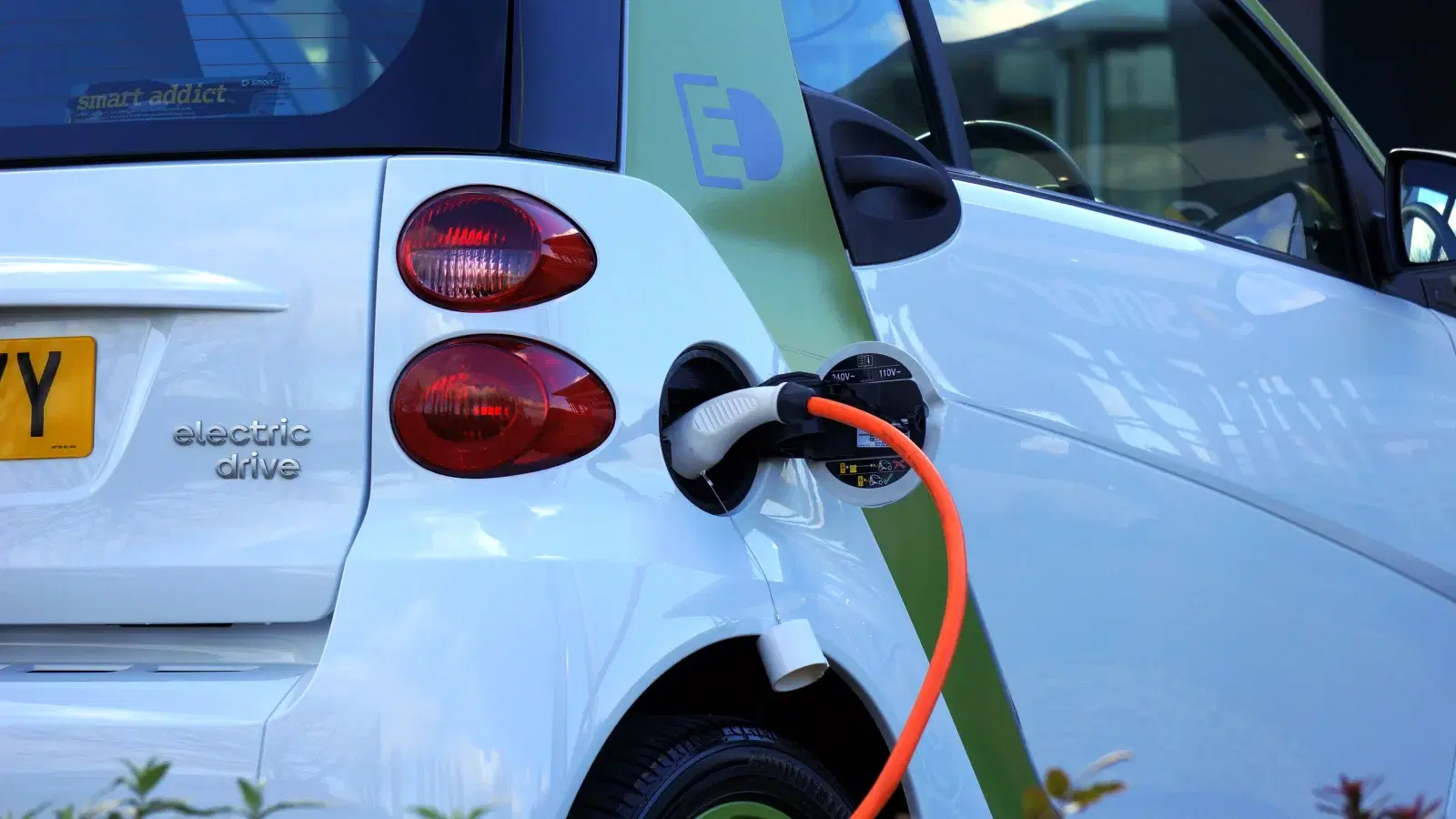
A Commission VII working committee hearing with three electric vehicle industry associations placed battery health transparency, reuse and recycling at the centre of Indonesia's EV ecosystem, years before the first large wave of batteries retires.
Indonesia's electric vehicle story has so far been told from the front of the value chain: nickel, processing, cell factories and sales. On Monday 21 September 2026, the House of Representatives turned attention to the other end. A working committee of Commission VII on the development of the national electric vehicle ecosystem and industrial competitiveness held a public hearing in Jakarta with three industry associations, Periklindo, Aismoli and AEML, and made battery health transparency and end-of-life battery management two of its central themes.
The hearing drew coverage from ANTARA, its Megapolitan desk, Periskop, OtoDream and a string of regional outlets over the following two days. For the waste and circular economy community, it marks a useful moment. Batteries that enter the fleet today will reach the end of their first life within the next decade, and the country now has a parliamentary venue asking how they will be tracked, reused and recycled.
A hearing that looked past the showroom
The session was led by Hendry Munief, a member of the Commission VII working committee. The agenda covered familiar industrial policy ground: domestic component levels (TKDN), standardisation, partnerships with local suppliers and the bankability of used electric vehicles. What set it apart was the explicit link drawn between those topics and the circular economy.
Two questions sat at the core. The first concerned the used vehicle market. Buyers of second-hand electric cars and motorcycles need clear information on the condition of the battery, expressed as its State of Health, or SoH. The second concerned what happens after that. Government and industry, Hendry said, should prepare mechanisms for batteries that have reached the end of their service life, including reuse and recycling in line with applicable standards.
"Electric vehicles cannot stand alone. Industry, batteries, infrastructure, financing, standardisation and local partnerships must be built as one ecosystem." Hendry Munief, Commission VII working committee, DPR RI
The committee also asked AEML to explain the investment commitments of its members toward building a recycling value chain for spent batteries, as mandated by Presidential Regulation No. 55 of 2019 on accelerating battery electric vehicles for road transport, since amended by Presidential Regulation No. 79 of 2023. The regulatory basis for battery recycling obligations therefore already exists. The hearing's contribution is to move it from a clause in the regulation toward a practical question of who builds what, and when.
The numbers behind the urgency
The growth figures explain why the conversation is arriving now. Periskop, drawing on industry and government data, reports that 33,150 battery electric cars were sold in the first quarter of 2026, a rise of 95.9 percent on the same period a year earlier. Electric motorcycles on the road reached 236,451 units by February 2026. Electric buses numbered 798 by April 2026, supported by 4,769 public charging stations (SPKLU) across 3,097 locations.
The manufacturing base is expanding at the same pace. According to CNBC Indonesia, the battery cell plant of PT Contemporary Amperex Technology Indonesia Battery (CATIB) in Karawang, West Java, a joint venture between Indonesia Battery Corporation and CBL, a subsidiary of CATL, began operating in July 2026. Its first phase has a capacity of 6.9 GWh per year, with a second phase of 8.1 GWh planned for 2028, for a total of 15 GWh. Energy and Mineral Resources Minister Bahlil Lahadalia has described that capacity as equivalent to batteries for roughly 250,000 to 300,000 cars.
Recycling is already part of the national plan. The Ministry of Energy and Mineral Resources lists a battery recycling project in East Halmahera, North Maluku, as one of the components of the integrated ANTAM, IBC and CBL consortium, with an investment of USD 200 million and a capacity of 20,000 tonnes per year. CNBC Indonesia reports a target start for that facility in 2031. Reported investment for the Karawang cell plant differs slightly between sources, IDR 19.2 trillion in the ministry's 2025 release and around IDR 21.19 trillion in CNBC Indonesia's September 2026 report, a gap that most likely reflects exchange rate movements rather than a change in scope.
Why battery health data is a circular economy tool
SoH transparency can look like a consumer protection issue. It is also the first building block of a working circular system for batteries. A battery with a known and trusted health rating can be priced fairly in the used vehicle market, which keeps it in its first use for longer. When it no longer suits a vehicle, the same data tells a refurbisher whether it can be repurposed, for example as stationary storage, or should go directly to material recovery.
Without that data, every used battery is a guess. Buyers discount it, lenders hesitate to finance it, and the eventual collector has no easy way to separate packs worth reusing from those ready for recycling. Hendry framed the market side clearly.
"Consumers of used electric vehicles must receive clear information about the health of their battery. SoH transparency is important for building market trust and maintaining the resale value of the vehicle."
The committee also looked abroad for models. It noted China's work on battery standardisation and safety testing, Thailand's EV3.5 scheme requiring partnerships with local suppliers, and India's emphasis on cross-brand interoperability and recycling mandates. Periskop adds that China's national standard GB/T 47136-2026 on battery health and safety assessment took effect on 1 May 2026, a reference point for any Indonesian standard on SoH reporting.
Planning ahead of the first retirement wave
The timing works in Indonesia's favour. Most of the country's electric fleet is young, which means the volume of batteries reaching end of life is still modest. That leaves a window to design collection, testing and recycling before volumes rise rather than after.
This hearing builds on earlier signals from the same commission. On 15 September 2026, Listrik Indonesia reported that Commission VII member Mohammad Toha asked the industry what recommendations should be prepared now to anticipate end-of-life vehicles and batteries three to five years ahead, and raised the development of national standards (SNI) and recycling mechanisms. Commission VII is therefore returning to the topic across successive sessions, which suggests it is becoming a standing item in the working committee's deliberations.
The industrial side is also moving. Periskop reports that National Economic Council Chair Luhut Binsar Pandjaitan has described battery recycling as important for making the most of Indonesia's nickel, and that BYD has said it is studying a complete battery ecosystem in the country, including recycling. Industry Minister Agus Gumiwang Kartasasmita has emphasised that Indonesia has the foundations to build an integrated EV value chain. A recycling link at the end of that chain completes the picture and keeps valuable nickel, cobalt, manganese and lithium within the domestic economy.
Sirkularium's view
For government and public institutions, the hearing offers a practical agenda that can be advanced now, while volumes are still small.
First, SoH reporting deserves a common national format. A standardised, verifiable battery health certificate attached to each vehicle would serve buyers, lenders, insurers and eventually recyclers. It could be developed through the SNI process and aligned with regional references such as China's GB/T 47136-2026 so that imported and domestically assembled vehicles report on the same basis.
Second, the recycling obligation in Presidential Regulation No. 55 of 2019 would benefit from a clear operational framework. The Ministry of Environment's current work on extended producer responsibility and producer responsibility organisations for packaging offers a template. A similar model for traction batteries, with registered take-back points at dealers and service centres, collection targets and reporting, would give manufacturers and importers a clear path to meet their obligations.
Third, collection infrastructure should reach beyond Java. The planned 20,000 tonne per year recycling plant in East Halmahera will sit near the nickel supply chain, while most batteries will retire in urban centres. Regional consolidation hubs, safe transport protocols for lithium batteries and a role for licensed hazardous material handlers will connect the two.
Fourth, the second-life market is an opportunity for local enterprises. Refurbishing packs for stationary storage, backup power for public facilities and rural electrification can create skilled jobs and extend the useful life of each battery before recycling. The committee's attention to small and medium industry participation fits well here.
What to watch next: the working committee's final recommendations to Commission VII, any move by the Ministry of Industry or the National Standardisation Agency on an SoH standard, investment announcements from AEML members on recycling, and progress on the East Halmahera recycling project ahead of its 2031 target. Each step will show how quickly Indonesia is building the circular end of its electric vehicle ecosystem alongside the industrial one.
Sources
- ANTARA News, DPR member urges management of used EV batteries
- ANTARA Megapolitan, DPR pushes EV battery management through end of life
- Fraksi PKS DPR RI, Hendry Munief on used batteries as a new economic resource
- Periskop, DPR pushes rules for used EV batteries with SoH transparency in focus
- OtoDream, DPR pushes a recycling system for used EV batteries
- Listrik Indonesia, Commission VII raises battery end-of-life planning
- Ministry of Energy and Mineral Resources, integrated battery industry project details
- CNBC Indonesia, CATIB battery plant in Karawang operating since July 2026