Bogor opens a waste station at City Hall that pays residents for sorted waste, with every district next in view
By Sirkularium Editorial Team, 8 min read
On 26 September 2026 the Bogor city government and Rekosistem opened a waste station at Balai Kota where residents trade sorted inorganic waste, used cooking oil and household electronics for points worth Rp100 to Rp6,000 per kilogram. Mayor Dedie A. Rachim has since signalled that the model could be extended to every kecamatan in the city.
A drop-off point at the seat of city government
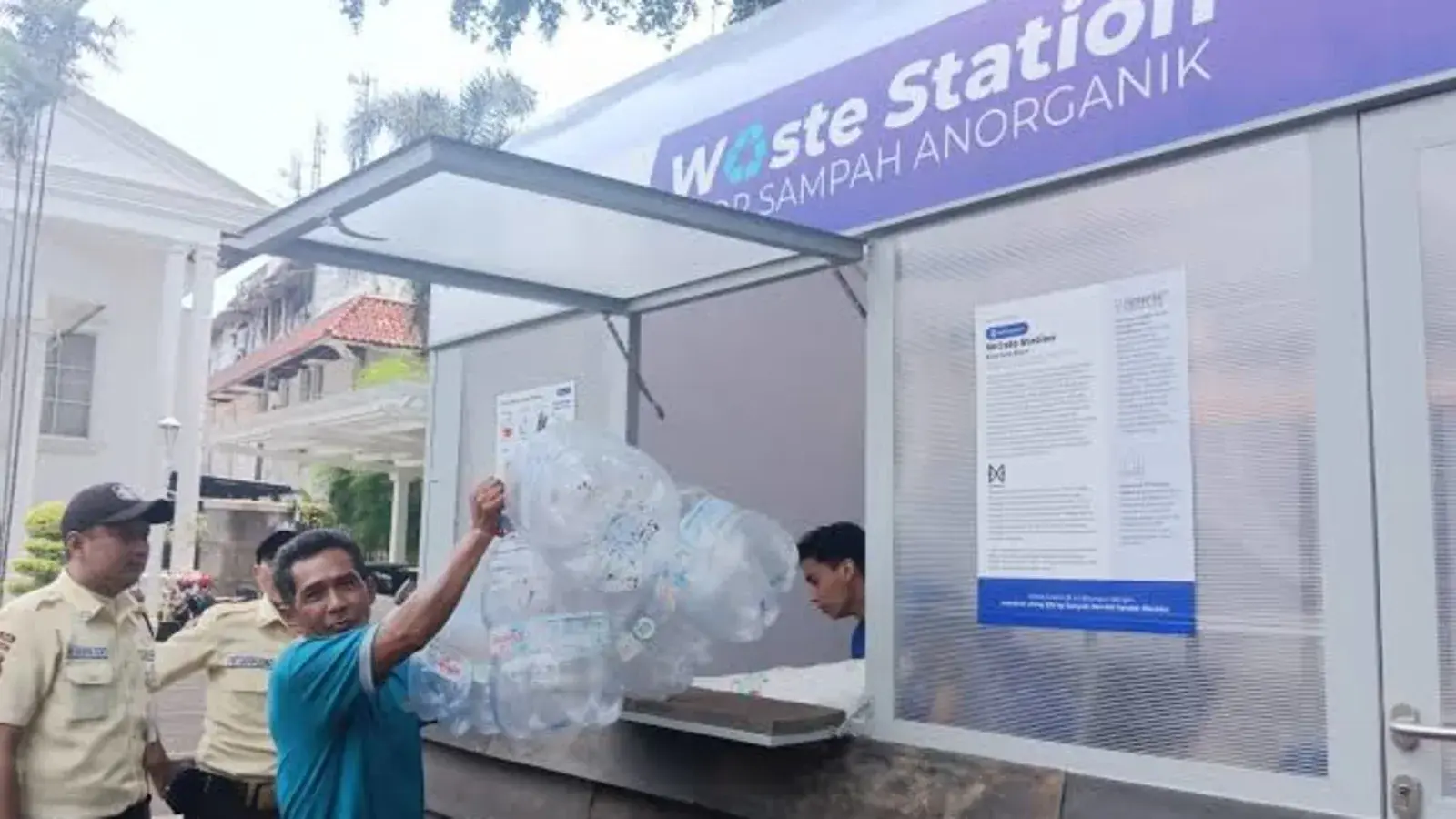
On Saturday 26 September 2026 the Bogor city government opened a waste station in the grounds of Balai Kota, the city hall at Jalan Ir. H. Juanda No. 10. It is operated with Rekosistem, a waste technology and material recovery company, and it works on a simple exchange. A resident brings sorted inorganic waste, the station weighs it, and the resident receives reward points that can be converted into a digital wallet balance or transferred to a bank account.
The opening was led by the Mayor of Bogor, Dedie A. Rachim, alongside Ernest Christian Layman, chief executive and co-founder of Rekosistem. By the following day the mayor was already speaking of the next step. ANTARA reported on 27 September that he had opened the way for waste stations in every kecamatan, the city's districts, which would turn a single demonstration point into a network within walking or short riding distance of most households.
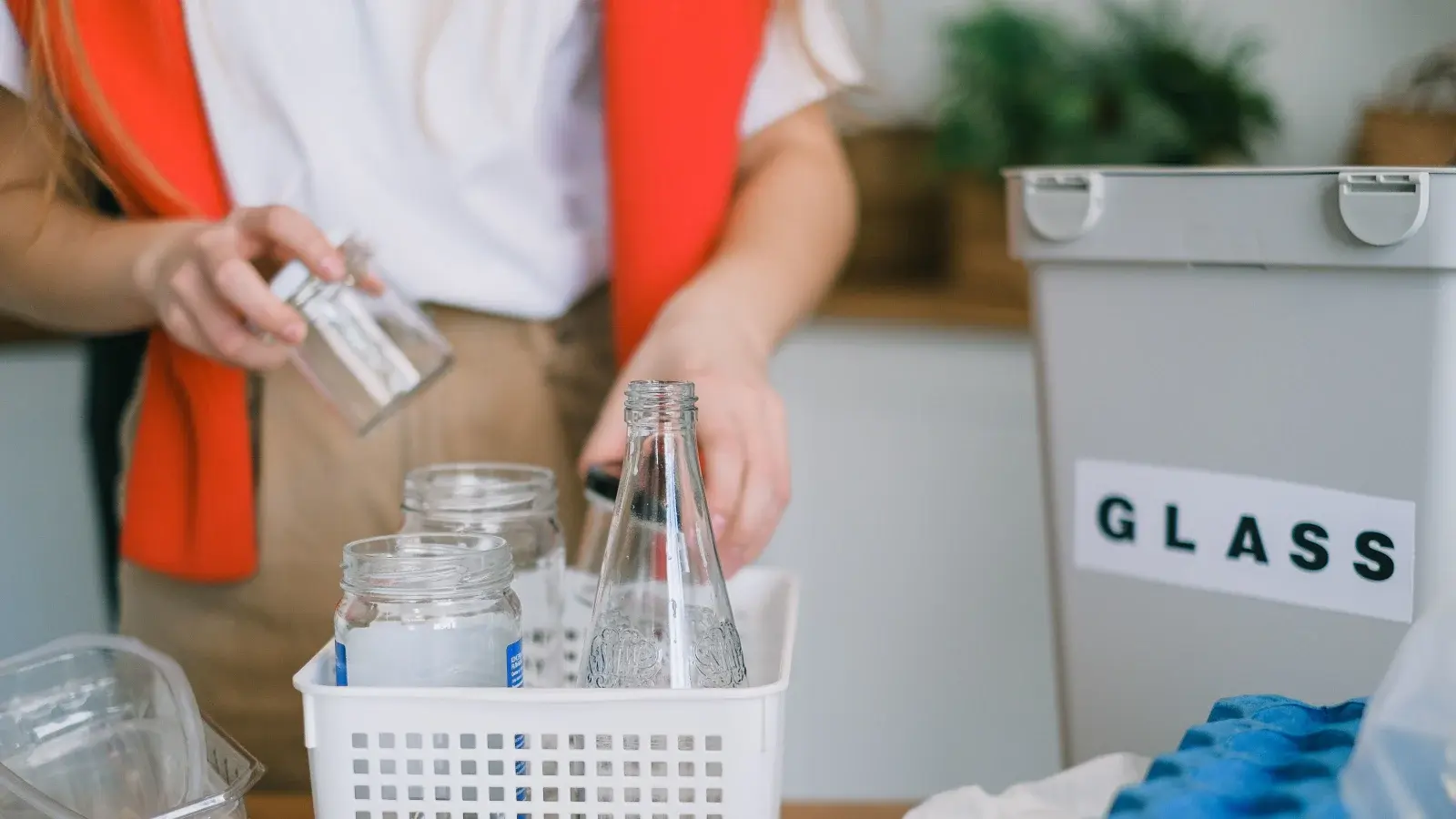
The list of accepted materials is broad. It covers plastic bottles and other plastics, cardboard and paper, metal, glass bottles, used cooking oil and household electronic waste. It also covers low-value packaging such as instant noodle wrappers and detergent sachets, the multilayer items that rarely find a buyer in the informal recycling chain and that most often end up burned, dumped or washed into rivers.
How the rewards are set
Rewards range from Rp100 to Rp6,000 per kilogram, depending on the type of material and the quantity delivered. The city's own release notes that point values are expected to grow as participation rises and sorting habits settle, which is a sensible way to frame the scheme. The first priority is volume and habit. Price discovery follows.
That range is worth reading against what the same operator offered elsewhere. When Rekosistem opened three waste stations in Bandung in April 2025, at the Astra Recycling Store, the Toyota Traffic Park and Parahyangan Catholic University, the Bandung city government listed Rp800 per kilogram for inorganic waste and Rp3,000 per kilogram for used cooking oil. The Bogor range is wider at both ends. It extends lower for the least valuable fractions and higher for the most valuable ones, which suggests a more differentiated price list rather than a flat inorganic rate.
Coverage of the Bogor launch describes it as the first Rekosistem waste station in West Java. The Bandung stations show that the operator has been present in the province since at least April 2025, so the more precise distinction is that Bogor's station is hosted at city hall and opened as a joint initiative with the city government. That difference is not a technicality. A drop-off point in the grounds of the mayor's office carries a signal about public priorities that a point in a retail car park does not.
A waste station at city hall turns source separation from a request into a service. Residents are asked to sort, and in return the city gives them somewhere to take what they have sorted and a reason to come back.
The recovery chain behind the counter
The station is the visible end of a longer chain that Bogor has been building with Rekosistem since early 2026. In February the mayor visited the company's recovery hub, a Rekohub, on Jalan Raya Ciawi in South Bogor, together with environmental activists, waste bank managers and community groups. The city's account of that visit describes a 756 square metre building on 3,000 square metres of land.
The figures shared at that visit give a sense of the throughput. Around 2.3 million plastic bottles are processed each year through Rekosistem in Bogor, and around 600,000 kilograms of used cooking oil is filtered annually. Local reporting from the same visit cited a production capacity of 3 million kilograms per year and 870,000 kilograms already recycled at the site. Material is sorted and pre-processed to meet factory specifications, and filtered used cooking oil is directed towards aviation fuel production.
Nationally, the company reported more than 90,000 registered households, over 1,000 partner aggregators across 126 districts and cities, 50 waste stations and 21 Rekohubs. Those numbers matter for Bogor because they mean the new station plugs into an existing offtake network. Materials collected at Balai Kota do not need a new buyer to be found for them. They join a flow that is already moving.
At the February visit the mayor made the policy intent explicit. As reported locally, he said that waste management is not only about downstream handling or waste-to-energy, but begins with households and communities sorting and making use of waste that still carries economic value.
The launch also drew on a wider set of partners. The city lists Yayasan Materia, the Ford Foundation, Parongpong RAWHAUS, the Ministry of Home Affairs and the Ministry of Environment among the parties involved, a mix of philanthropic, technical and government actors that gives the initiative more resilience than a single corporate programme would have.
Upstream and downstream, built at the same time
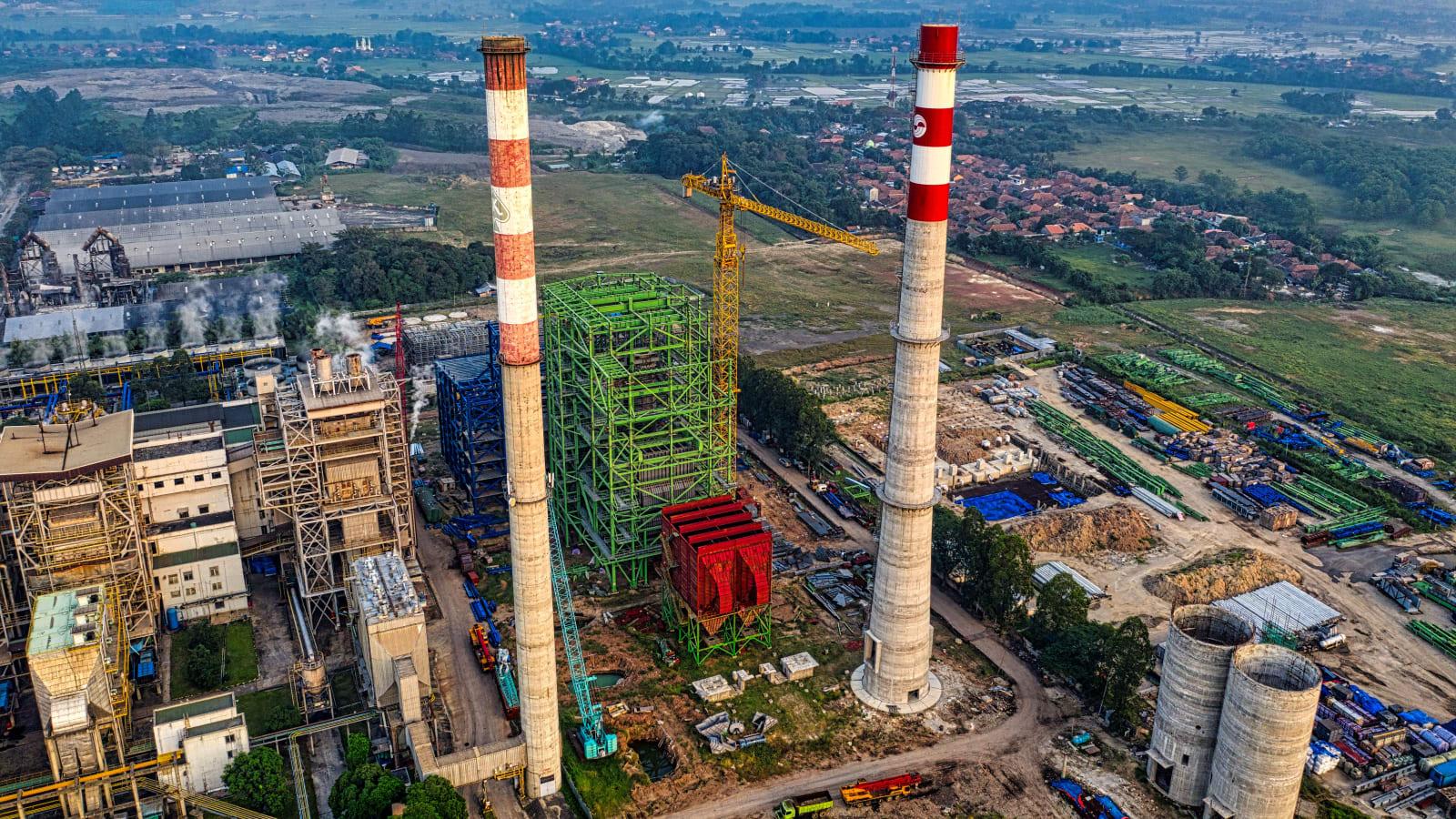
Bogor is one of the few Indonesian cities currently working on both ends of the waste system at once. Downstream, the Bogor Raya waste-to-energy facility at Galuga broke ground in mid September 2026. Upstream, the city is now building points where sorted material can leave the waste stream before it ever reaches a truck.
The two efforts are complementary rather than competing. A thermal plant performs best on a consistent, lower-moisture feedstock, and every kilogram of plastic bottle, cardboard or cooking oil that is recovered upstream is a kilogram that earns more as a material than as fuel. Organic waste and residue are outside the scope of the Rekohub, which means the station also helps to clarify what should go where. Recyclables go to recovery. Organics go to composting, maggot cultivation or TPS3R facilities. Residue goes to final treatment.
The city's framing of the launch places it inside Indonesia ASRI, the national movement for a safe, healthy, clean and beautiful Indonesia. Mayor Dedie described the station as a tool for accustoming residents to sorting waste by type, and as part of building people rather than only infrastructure, so that waste problems can be resolved. Ernest Layman's message was the complementary one: that communities can take part in managing their own waste well when they are given a practical way to do so.
Why a district network is the right next step
The national context explains why this kind of upstream infrastructure matters. At the Ministry of Environment's National Coordination Meeting on Waste Management in February 2026, the ministry reported that at the end of 2025 about 25 percent of Indonesia's waste was properly managed, some 36,684 tonnes per day, while around 105,483 tonnes per day was not yet handled. The ministry set a target of 63.41 percent managed in 2026 and 100 percent by 2029. Environment Minister Hanif Faisol Nurofiq put the direction plainly.
"The old paradigm of collect, transport and dump must be abandoned. Reduction at the source through 3R and the circular economy is the key." Hanif Faisol Nurofiq, Minister of Environment, February 2026
Closing a gap of that size will not come from end-of-pipe facilities alone. It requires thousands of small, reliable points where separated material can be handed over, and it requires households to trust that sorting leads somewhere. A single station at city hall proves the mechanism. A station in every kecamatan would make it part of daily routine, and it would give the city a data stream, by material and by district, that it currently lacks.
Sirkularium's view
Bogor's waste station is a modest facility with a large implication. It shows a city government using its own premises, its own convening power and an existing private recovery network to make source separation convenient and rewarded. That combination is replicable, and it does not require a large capital budget.
For city and regency governments considering a similar model, Sirkularium sees four practical lessons. First, host the first station on public land that residents already visit, because visibility builds trust faster than advertising. Second, publish the price list and keep it stable enough that households can plan, while leaving room for values to rise as volumes grow. Third, integrate the station with existing waste banks and TPS3R facilities rather than competing with them, so that community operators gain an offtake channel rather than lose their members. Fourth, require the operator to report monthly tonnage by material and by collection point, so that each station contributes to the city's performance reporting under the national waste targets.
For national policymakers, the model offers a useful complement to the extended producer responsibility agenda. Low-value sachets and multilayer packaging are exactly the fractions that producers are being asked to take responsibility for. A network of municipal waste stations with a verified chain to recovery could become one of the collection channels through which producer obligations are met and measured.
What to watch next is the district rollout. The number of kecamatan stations that open, the tonnage they collect in their first months, and whether reward values rise as the mayor has suggested will show whether Bogor's city hall station becomes a network or remains a showcase. The early signals, a clear mandate from the mayor, a recovery chain already in place and a broad group of partners, point towards the former.
Sources
- Bogor City Government, Waste Station Rekosistem strengthening the waste ecosystem from upstream to downstream
- ANTARA News, the Mayor of Bogor opening the way for a waste station in every district
- VOA Bogor, Rekosistem waste station arrives at Bogor City Hall with rewards for residents
- Bogor City Government, the February 2026 collaboration with Rekosistem on upstream waste management
- Bogor-Kita, the mayor's visit to the Rekosistem recovery hub in Ciawi
- Bandung City Government, Rekosistem waste stations opening in Bandung in April 2025
- Ministry of Environment, National Coordination Meeting on Waste Management 2026