Bekasi's refuse derived fuel plant reaches construction with 1,250 tonnes a day and its buyer already signed
By Sirkularium Editorial Team, 9 min read
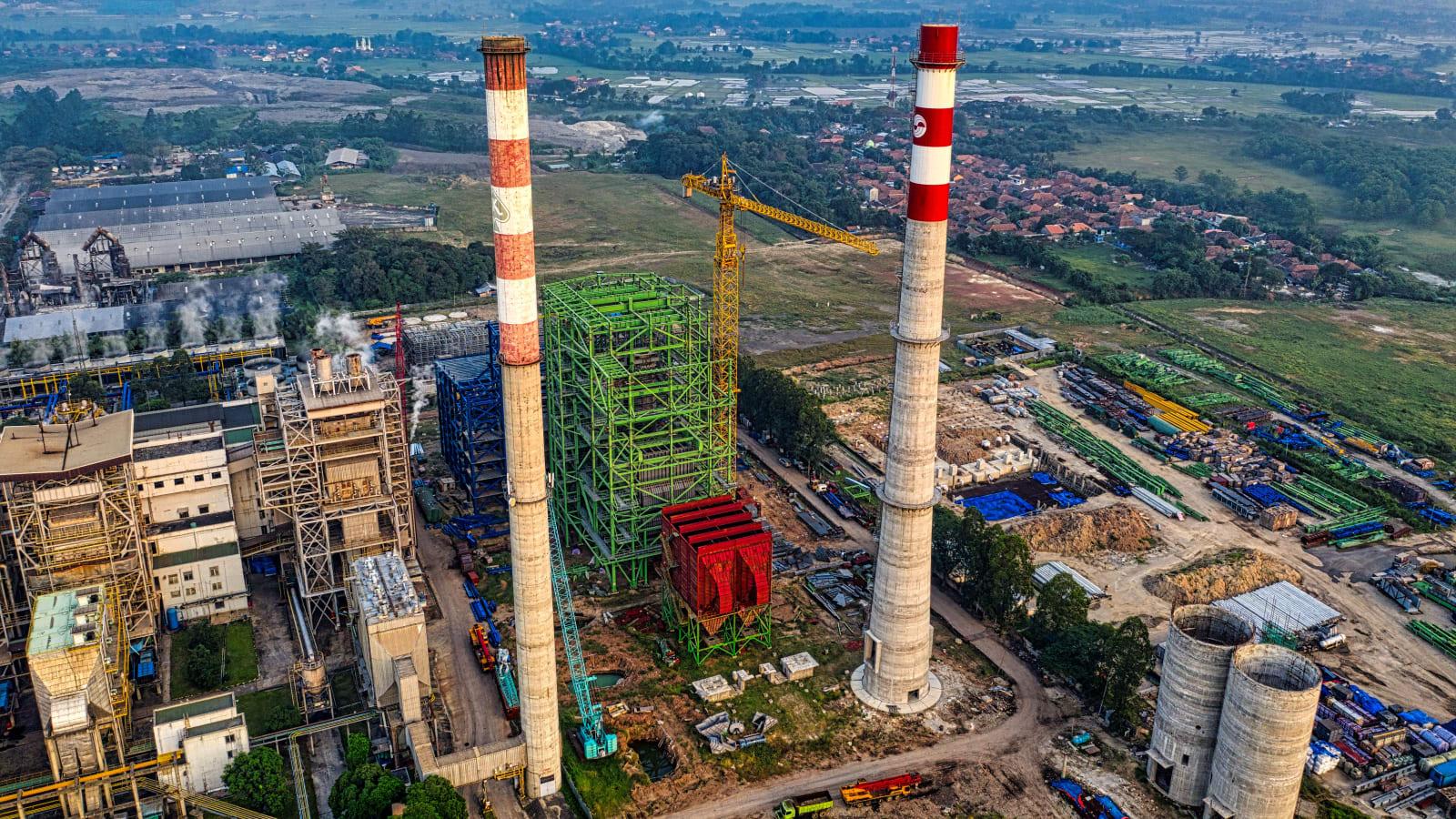
Asiana Technologies confirmed on 21 September 2026 that the refuse derived fuel plant at TPA Burangkeng in Bekasi Regency is under construction and targeted to start operating in early January 2027, taking 1,250 tonnes of landfill waste a day and producing 650 tonnes of fuel, with PT Indocement Tunggal Prakarsa Tbk contracted to take the entire output.
A plant that started with a signed buyer
On Monday 21 September 2026, Asiana Technologies confirmed that its refuse derived fuel plant at TPA Burangkeng in Bekasi Regency, West Java, has moved into construction and is targeted to begin operating in early January 2027. The facility is designed to take 1,250 tonnes of landfill waste a day and turn it into roughly 650 tonnes a day of refuse derived fuel, known in the sector as RDF. PT Indocement Tunggal Prakarsa Tbk is contracted as the offtaker for the output.
Poltak Sitinjak, founder of Asiana Technologies, placed the emphasis where practitioners know it belongs. Securing an offtaker, he said, is the decisive factor in developing waste to fuel facilities, and the model works through a business to business scheme without government subsidy. He put the wider ambition in one line, that waste to fuel is the future of Indonesia's energy, and confirmed plans to develop similar facilities at other landfills to supply cement plants and coal fired power stations.
The sequence in Bekasi is the one that makes these projects bankable. The buyer was found first, the contract was signed, and only then did construction begin. A plant without a confirmed offtaker produces a commodity nobody has agreed to purchase.
Why the cement sector is the natural first customer
RDF is processed municipal waste, sorted and dried to a usable calorific value, then burned as a partial substitute for coal. Cement kilns are well suited to it, because they run continuously at very high temperatures and already have coal handling infrastructure that can be adapted. Indonesia's cement industry has been substituting alternative fuels for several years, which means the demand in this arrangement is not speculative. It is an existing industrial requirement that municipal waste can meet.
That matters for the economics of the whole chain. In a conventional arrangement, a regency pays a tipping fee to have waste accepted somewhere. In an RDF arrangement with a committed industrial buyer, the material acquires a market value at the end of the line, which is what allows the processing to be financed commercially rather than from a public budget. The stated investment requirement is around Rp450 billion for a plant sized at 1,000 tonnes a day, a figure that gives other regencies a usable benchmark when they assess proposals of their own.
The arrangement also sits comfortably inside national policy direction. The Ministry of Environment has confirmed that Indonesia's programme is technology neutral, with pyrolysis, refuse derived fuel, briquettes and pelletising all welcome alongside electricity generation. Bekasi Regency's RDF plant and the separate waste to energy facilities advancing elsewhere in the Bekasi area are not competing approaches. They are different tools suited to different feedstocks, different offtake markets and different financing structures.
The fiscal case the regency made
The agreement behind this plant was concluded on 13 May 2026, when the Bekasi Regency government and PT Asiana Technologies Lestary signed a cooperation covering two integrated programmes, landfill mining to excavate accumulated waste and restore site capacity, and RDF conversion to turn waste into a coal substitute for industry.
Syafri Donny Sirait, head of the Bekasi Regency environment office, set out the reasoning at the time. Waste management is a major challenge for a fast growing area, he said, and a regional government can no longer rely only on the conventional approach of collect, transport and dump. He described the ambition for the site as turning TPA Burangkeng into a new renewable energy plant serving industries within the regency.
The figures attached to that decision are the part other administrations should study. At a standard tipping fee of Rp250,000 per tonne, the arrangement is reported to avoid roughly Rp143 billion a year in fees the regency would otherwise pay, while generating in the order of Rp1 billion a year in regional revenue. The revenue figure is modest. The avoided cost figure is not. For a regency budget, a recurring saving of that size is the difference between a waste programme that competes with other priorities every year and one that pays for its own expansion.
The scale of the task in Bekasi Regency
Context makes the plant's capacity easier to read. Bekasi Regency generates about 2,250 tonnes of waste a day across a population of roughly 3.3 million people, which works out at about 0.7 kilogrammes per person per day. TPA Burangkeng, in Setu district, has been under sustained pressure as its available capacity has filled.
Against that, a plant taking 1,250 tonnes a day covers a substantial share of the regency's daily generation. It does not cover all of it, and it is not intended to. The regency has been pursuing several tracks at once, including expanding waste banks at neighbourhood level to reduce the volume arriving at Burangkeng in the first place, enforcing its 2025 waste management bylaw against illegal dumping, and coordinating clean up operations with the Ministry of Environment under the Gerakan Indonesia ASRI movement. Acting Regent Asep Surya Atmaja has also worked through the regional leadership forum on a citizen reporting scheme for illegal dumping.
The landfill mining component deserves attention in its own right. Excavating and processing waste that has already been landfilled does something new capacity cannot do, which is recover site life that has already been consumed. For a landfill under capacity pressure, that is the fastest available route to breathing room, and it converts a liability that has been sitting on the books into feedstock.
What other regencies can take from this
Sirkularium would draw four practical points for government and public institutions considering a similar structure.
First, contract the offtake before the plant. The order of operations in Bekasi was buyer, then contract, then construction. Regencies assessing RDF proposals should ask to see the offtake agreement, its volume, its duration, and its price mechanism, before assessing anything else. An unsold tonne of RDF is simply waste that has been handled twice.
Second, specify the fuel to the buyer's requirement. Cement kilns and power stations have calorific value, moisture and chloride specifications. Meeting them consistently depends on what arrives at the gate, which is why source separation and the RDF business case are connected rather than separate agendas. Every tonne of clean, dry, sorted material raises the yield from the same throughput.
Third, quantify the avoided cost and put it in the decision paper. Bekasi's Rp250,000 per tonne tipping fee, and the roughly Rp143 billion a year it avoids, is the number that makes the case to a finance office. Many regencies have never calculated their own equivalent, and without it a processing partnership looks like an expense rather than a saving.
Fourth, treat landfill mining as a capacity strategy. Where a site is near its limit, recovering airspace from material already buried can buy years, and the recovered fraction feeds the same plant.
The Bekasi model is worth watching precisely because it asks the public budget for so little. The regency contributes waste and a site. The private partner contributes capital. The industrial buyer contributes demand.
Sirkularium's view
Sirkularium reads the Burangkeng project as a useful counterpoint to the assumption that municipal waste processing must be publicly financed. Where a credible industrial buyer exists within economic hauling distance, a business to business structure can deliver processing capacity without a subsidy line, and the regency's contribution is the feedstock and the site rather than the capital.
The caution is equally practical. A single offtaker is a single point of dependence, and a plant built around one cement company's requirement is exposed to that company's production schedule. Regencies entering similar arrangements should look for contract terms that address minimum offtake volumes, what happens during a buyer's maintenance shutdown, and whether an alternative buyer, a second cement plant or a coal fired power station, could be qualified as a backup. Asiana Technologies' stated plan to build at multiple landfills and supply both cement and power generation suggests the market is broadening, which over time reduces exactly this risk.
What to watch next is commissioning in early January 2027, the actual yield ratio once the plant is running against the designed 1,250 tonnes in and 650 tonnes out, the quality specification Indocement accepts in practice, and whether the landfill mining component delivers measurable recovered capacity at Burangkeng during its first year of operation.
Bekasi Regency waste flows and the Burangkeng RDF plant, tonnes per day
Values in tonnes per day
Sources
- ANTARA News, RDF Bekasi to process 1,250 tonnes of waste a day, operating early next year
- Jawa Pos, Bekasi RDF plant targeted to operate in January 2027 with 1,250 tonnes a day input
- SindoNews, waste becomes alternative fuel as the Bekasi Regency RDF plant prepares for 2027
- JPNN, Bekasi waste processing plant targeted to operate in January 2027
- Indoposco, 1,250 tonnes a day production target for the Bekasi RDF plant
- detikNews, RDF built at TPA Burangkeng Bekasi to process 1,000 tonnes of waste a day
- KBE Online, Bekasi Regency handles 2,250 tonnes of waste a day and sets out its strategy
- Bekasi Regency government, cooperation with PT Asiana Technologies Lestary for 1,000 tonnes a day at TPA Burangkeng