
Bandung moves its refuse derived fuel up the value chain, from loose RDF to briquettes
By Sirkularium Editorial Team, 8 min read
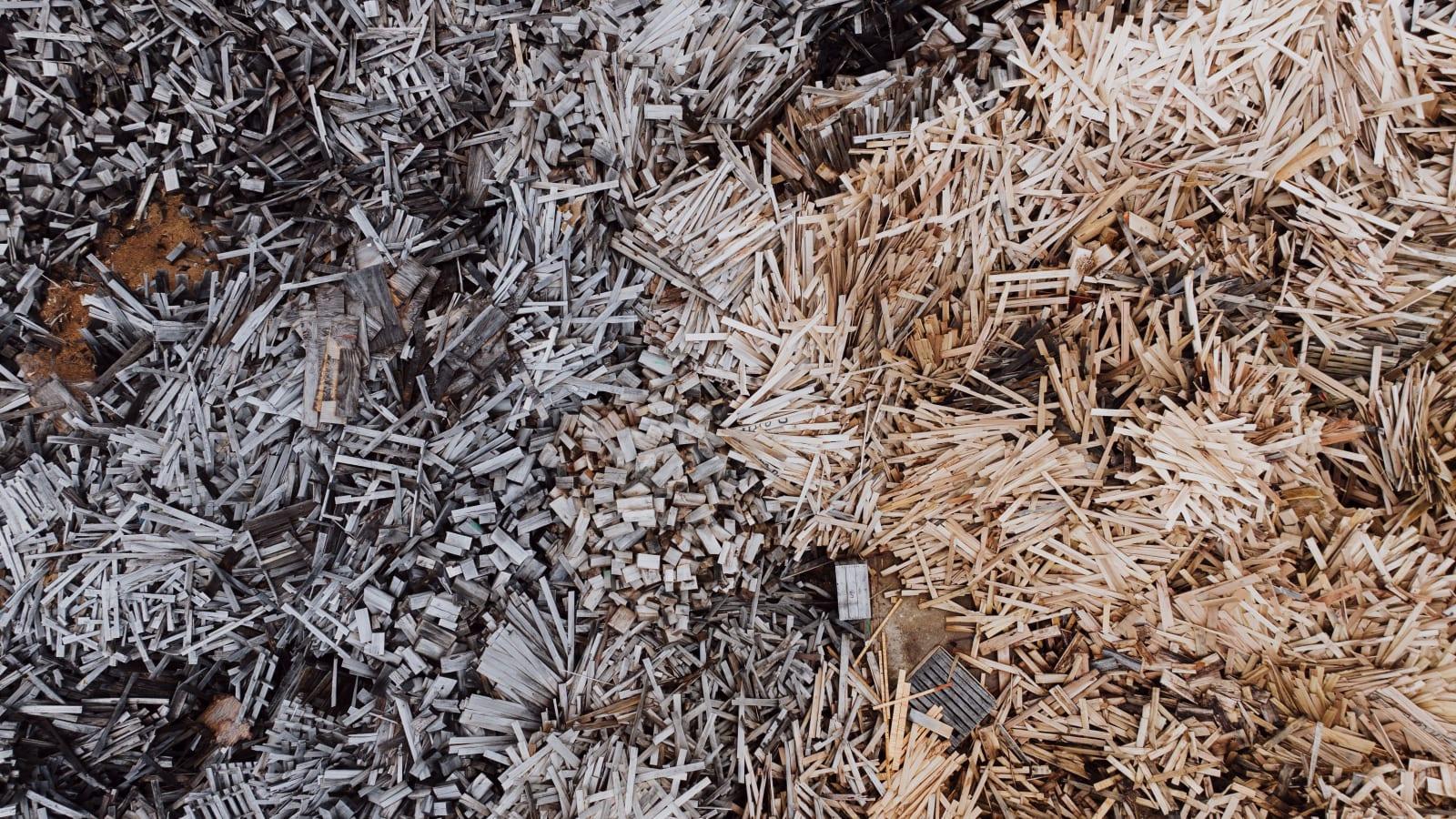
Bandung City Secretary Iskandar Zulkarnain inspected the Tegalega integrated waste processing facility on 5 August 2026 and set a higher product specification for it: not bulk refuse derived fuel, but pressed briquettes with a wider buyer base. The plant is designed for 25 tonnes of waste a day and was built for Rp19.9 billion under a World Bank supported programme.
On Wednesday, 5 August 2026, Iskandar Zulkarnain, Regional Secretary of Bandung City, walked the Tegalega integrated waste processing site and came away with a revised instruction for the plant. It should not stop at producing loose refuse derived fuel. It should press that material into briquettes.
The change reads as a technical detail. In commercial terms it is the difference between a single off-take relationship and a product with several possible buyers. Republika Rejabar reported the inspection on 6 August, with Kapol.id, Koran Jakarta, Tribun Jabar and Radar Bandung covering the same visit. The consistency across those accounts is useful, because it means the city has been explicit in public about what it wants the facility to deliver.
Kalau produk akhirnya sudah berbentuk briket, nilai ekonominya tentu lebih menjanjikan. Briket ini bisa diterima oleh beberapa off-taker dan bahkan dapat dimanfaatkan sebagai bahan bakar untuk jenis kompor tertentu yang digunakan pelaku UMKM.
Zulkarnain's point, rendered plainly, is that a briquette carries a better economic proposition than bulk RDF, that several off-takers will accept it, and that it can serve as fuel for certain stove types used by small and micro enterprises. That last clause is the interesting one. It puts a municipal waste product into a domestic energy market rather than leaving it dependent on a single industrial buyer.
What the facility was built to do
TPST Tegalega is not a new asset. According to the Ministry of Public Works, construction ran from 13 July 2023 to 2 December 2024 at a cost of Rp19.9 billion, financed through the World Bank supported Improvement of Solid Waste Management to Support Regional and Metropolitan Cities programme, with the West Java Building, Infrastructure and Area Development Agency acting as operator. Deputy Minister of Public Works Diana Kusumastuti inspected it alongside TPST Cicukang Holis in June 2025.
Its original purpose was straightforward. ANTARA News Jawa Barat reported in January 2025, when the plant was completing its testing phase, that it was designed to turn 22 to 25 tonnes of waste a day into refuse derived fuel for the cement industry. A Koswara, then Acting Mayor of Bandung, noted at the time that the feedstock was not household waste in the raw sense but material recovered from transfer station sorting and from city parks: residue, leaves, branches and organic matter.
Koswara also flagged the constraint that still shapes the plant's economics today. When waste arrives unsorted, it has to be sorted again at the transfer station before it reaches the TPST, which doubles the handling work. Feedstock quality determines throughput. That is why the 25 tonne figure is consistently described as a target conditional on sorting discipline rather than a guaranteed daily rate.
The processing network Tegalega belongs to
Tegalega is one node in a deliberately decentralised system. The Ministry of Public Works records TPST Cicukang Holis at 60 tonnes a day of combined capacity, split between a 10 tonne first phase built between 12 December 2024 and 25 May 2025 for Rp5.8 billion, and a 50 tonne second phase built between 13 July 2023 and 25 April 2025 for Rp41.2 billion. Both were financed under the same World Bank programme.
Set against the city's overall load, these are modest units, and they are meant to be. Reported daily waste generation for Bandung varies across sources, from more than 1,200 tonnes in some accounts to about 1,500 tonnes in others and 1,700 tonnes in Kompas Bandung's June 2026 reporting. Sirkularium notes the range rather than settling on one figure, since the numbers appear to reflect different measurement bases and different periods. What the accounts agree on is direction: volumes have been rising.
Alongside the engineered plants, Bandung has been building capacity at the neighbourhood level. Teropong Media reported in May 2026 that the city had 1,510 composting pits in place with a combined capacity above 2,800 cubic metres, against a target of 25,000 across all community units, together with 18 operating processing units handling roughly 18 tonnes a day and two further units using additional processing technology awaiting operation.
Why the timing matters
Bandung is working to a schedule. The city's disposal quota to TPA Sarimukti has been stepped down in stages, moving from 980 tonnes a day toward 600 tonnes, with reductions applied at roughly two week intervals. Kompas Bandung reported in June 2026 that Sarimukti's remaining capacity was projected to be reached in October 2026, while the regional replacement at Legok Nangka in Nagreg is planned to begin operating in 2029.
That gap between one site reaching its limit and its successor coming online is the practical reason the Tegalega decision matters now. Every tonne processed into a saleable product is a tonne that does not need disposal capacity. Mayor Muhammad Farhan has framed the response in terms of local solutions, particularly for organic material, rather than continued reliance on transfer stations alone.
Read that way, the briquette instruction is not a refinement for its own sake. It is an attempt to make the processing route financially self supporting during the period when the city most needs it to run at capacity. Bulk RDF sold into cement kilns is a real market, and the city has been clear it will continue supplying bulk material under existing industrial arrangements. Adding a briquette line widens the customer base without abandoning the original one.
Commissioning before handover
The city has also been deliberate about acceptance. Zulkarnain stated that the equipment was procured by the Ministry of Public Works and will be granted to the regional government, but that the city will accept the assets only once all functions are genuinely optimal.
Commissioning is underway, and the evaluation so far has identified equipment that needs refinement, with some units possibly requiring replacement because the machine specifications do not yet fully match the characteristics of Bandung's waste. Saying so publicly is a form of asset governance. A plant handed over before it performs becomes an operating cost for the receiving government, and the record of Indonesian waste infrastructure includes facilities that transferred in that condition.
Sirkularium's view
For government and public institutions, Tegalega offers three transferable lessons.
The first concerns product strategy. Public waste facilities are usually specified around throughput, measured in tonnes processed. Bandung is specifying around output value instead, asking what form the product should take to reach the widest set of buyers. Briquettes serving both industrial off-takers and micro enterprise stoves illustrate the difference between a plant that disposes of material and one that sells it.
The second concerns feedstock. Both the January 2025 and August 2026 accounts identify sorting quality as the binding constraint on capacity. Capital investment in processing equipment delivers its designed return only when upstream separation is working. For any local government financing a TPST, the household and transfer station sorting programme is part of the plant's business case, not a separate initiative.
The third concerns handover discipline. Conditioning acceptance on demonstrated performance protects the receiving budget and creates the right incentive during commissioning. It is a simple contractual posture that other regional governments receiving centrally procured assets can adopt directly.
What to watch next is whether the briquette specification converts into signed off-take. The economic case rests on buyers, and the named opportunity in the micro enterprise fuel market will need a price point, a distribution route and a consistent product standard before it becomes revenue. If Bandung can demonstrate that a 25 tonne a day municipal facility can sell into more than one market, the model becomes replicable at a scale most Indonesian cities can actually finance.
Daily design capacity of Bandung's World Bank funded TPST units
Values in tonnes per day
Sources
- Republika Rejabar, Bandung city government prepares TPST Tegalega to produce value added RDF briquettes
- Kapol.id, Bandung pushes TPST Tegalega toward RDF briquette production to lift the economic value of waste
- Koran Jakarta, Bandung city government prepares TPST Tegalega for RDF briquette production
- Tribun Jabar, TPST Tegalega projected to process 25 tonnes of waste a day
- ANTARA News Jawa Barat, TPST Tegallega processes 25 tonnes of waste into alternative fuel
- Ministry of Public Works, Deputy Minister Diana inspects TPST Tegallega and TPST Cicukang Holis
- Teropong Media, Bandung's disposal quota to TPA Sarimukti moves from 980 tonnes to 600 tonnes
- Kompas Bandung, waste reaches 1,700 tonnes a day and TPA Sarimukti capacity is projected to be reached in October 2026